Compliance Automation Software: The Complete Guide for SMBs
Compliance automation software helps small and mid-sized businesses (SMBs) achieve and maintain security certifications like SOC 2, HIPAA, ISO 27001, GDPR, and PCI-DSS without hiring an army of consultants or drowning in spreadsheets. This complete guide explains what compliance automation software is, how it works, what it costs, and how to choose the right platform so your team can reach audit-ready status in weeks instead of months. Whether you are pursuing your first SOC 2 report to close an enterprise deal or scaling a multi-framework program, this page is your starting point.
What is compliance automation software?
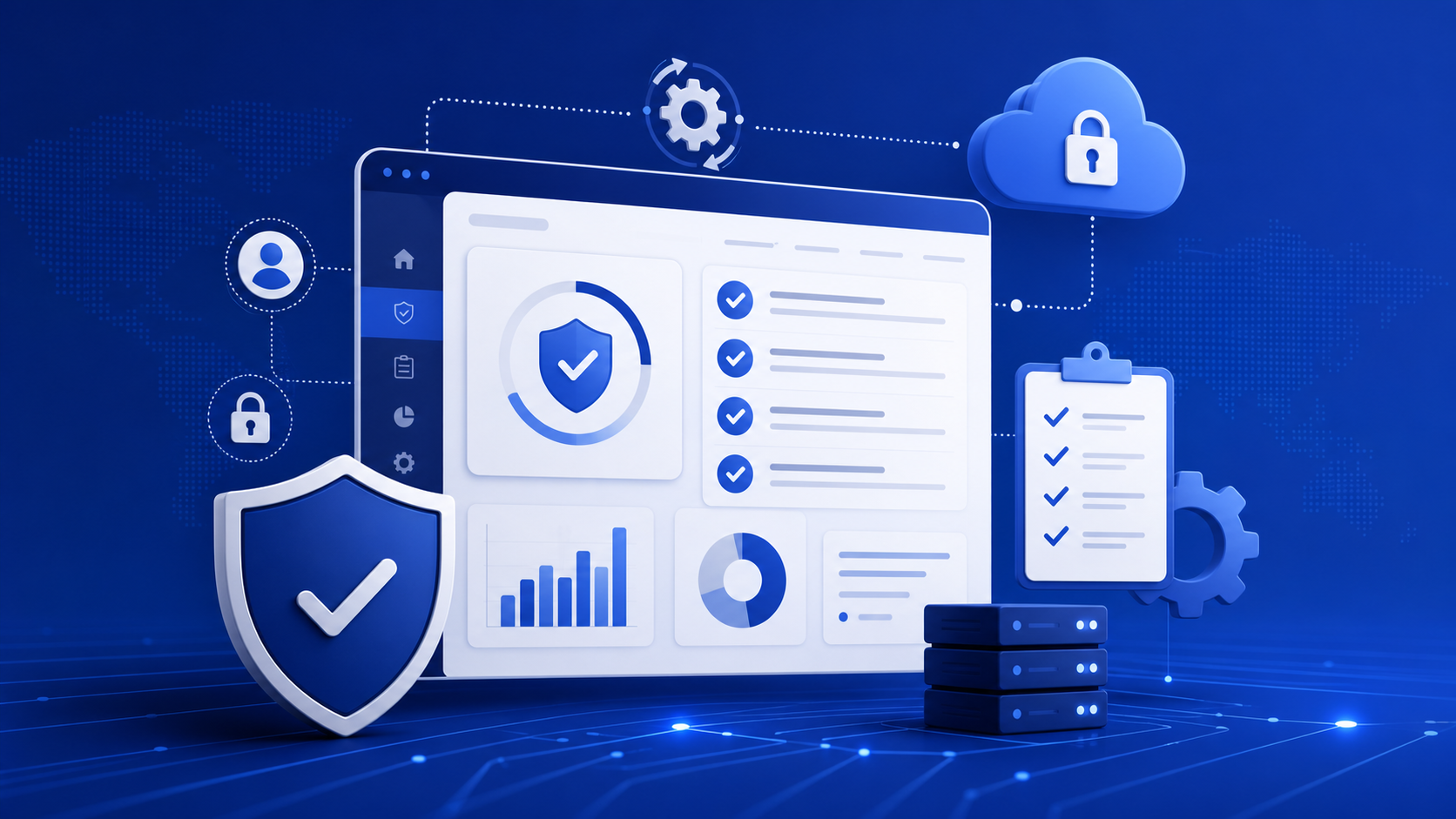
Compliance automation software is a centralized platform that replaces manual, screenshot-and-spreadsheet audit preparation with continuous, automated workflows. Instead of chasing evidence across email threads the week before an audit, the software connects directly to your cloud infrastructure, identity provider, and business tools to collect timestamped evidence automatically, monitor your security controls around the clock, and map a single control to multiple frameworks at once.
For SMBs, the value is straightforward: compliance becomes a background process rather than a fire drill. The platform tells you exactly which controls are failing, generates auditor-ready reports, and keeps you continuously prepared so the next audit is never a scramble.
How compliance automation works
Modern platforms share three core capabilities that turn point-in-time compliance into continuous readiness.
Automated evidence collection
The software integrates via API with your stack — cloud providers (AWS, Azure, GCP), identity systems (Okta, Google Workspace), code repositories, and HR tools — to pull live, timestamped evidence. This eliminates the hundreds of manual hours teams typically spend gathering screenshots and exports before an audit.
Continuous control monitoring
Rather than checking controls once a year, automation runs tests continuously (often hourly or daily) and flags configuration drift the moment it happens — an unencrypted volume, a disabled MFA setting, or an over-privileged account. A well-designed SOC 2 continuous monitoring program is what keeps you audit-ready between reporting periods.
Cross-framework mapping
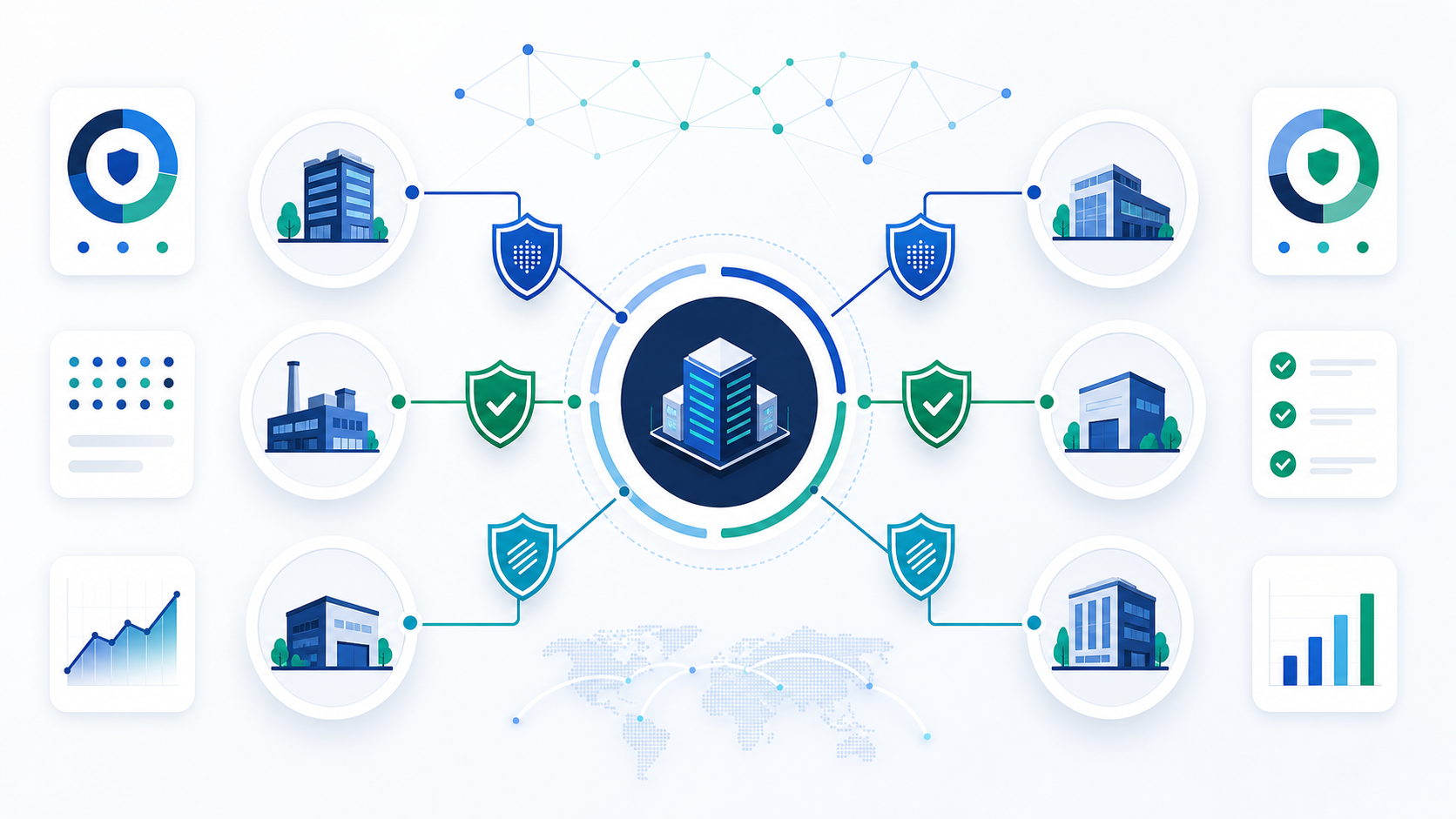
The biggest efficiency win is "test once, comply many." Evidence you collect for SOC 2 can be reused to satisfy overlapping requirements in HIPAA, ISO 27001, GDPR, and PCI-DSS. This is especially powerful for companies pursuing multiple certifications — for example, our guide to PCI-DSS and SOC 2 compliance mapping shows how to avoid duplicating work across two frameworks.
Which compliance frameworks can you automate?
The five frameworks most relevant to SaaS and technology SMBs are SOC 2, HIPAA, ISO 27001, GDPR, and PCI-DSS. Here is how each fits, with links to deeper guides on each topic.
SOC 2
SOC 2 is the most commonly requested report in B2B SaaS sales. It proves your controls meet the AICPA Trust Services Criteria. If you are starting out, read SOC 2 compliance for startups without a full-time security team and learn the difference between report types in SOC 2 Type I vs Type II. A strong access control policy is one of the first controls auditors examine.
HIPAA
If you handle protected health information (PHI), HIPAA applies. Start by scoping your obligations with covered entity vs business associate, then put the required agreements in place using our business associate agreement template. Round out your program with a documented incident response plan and an audit-ready employee training program.
ISO 27001
ISO 27001 is the international standard for information security management systems (ISMS) and is often required by European and enterprise buyers. Budget accurately with our ISO 27001 certification cost breakdown, and prepare for surveillance with the ISO 27001 internal audit guide.
GDPR
Any company serving EU residents must comply with GDPR. Use our GDPR compliance checklist for U.S. SaaS companies to get oriented, formalize processor relationships with a data processing agreement template, and operationalize the rules with a data retention policy and a repeatable data subject access request (DSAR) process.
PCI-DSS
If you store, process, or transmit cardholder data, PCI-DSS v4.0 applies. Meet the current mandate with our PCI-DSS v4.0 requirements guide and understand testing obligations in PCI-DSS penetration testing requirements for SMBs.
Benefits of compliance automation software for SMBs
- Faster time to audit-ready: Automated evidence collection and guided remediation can compress preparation from months to weeks.
- Lower cost: You reduce or eliminate the expensive consultant hours that traditionally dominate a first audit.
- Continuous readiness: Because controls are monitored continuously, you stay prepared for the next audit instead of starting over each year.
- Faster enterprise sales: A current certification and a public trust posture help you clear procurement and respond to security questionnaires quickly.
- Stronger vendor risk posture: Automation extends to third parties — see our guide to vendor risk management across SOC 2, ISO 27001, and HIPAA.
Key features to look for
Not all platforms are equal. When you evaluate compliance automation software, prioritize:
- Integration depth: The platform must connect natively to the exact tools in your stack, not rely on shallow connectors that force manual uploads.
- Cross-framework mapping: If ISO 27001 or HIPAA is on your roadmap, choose a platform that reuses SOC 2 evidence rather than making you start over.
- Guided, plain-language remediation: Findings should come with clear, prioritized steps — not just red flags.
- Auditor-ready reporting: Look for one-click export of gap analyses, evidence, and audit trails formatted for external auditors.
- Signal over noise: A good dashboard filters non-critical alerts so your engineers are not overwhelmed by alert fatigue.
- Transparent pricing and no audit lock-in: Be cautious of bundles that obscure the true cost of software versus the audit itself.
How much does compliance automation software cost?
Total cost has two separate components that you should always evaluate independently:
- Platform fees — annual software licenses commonly range from roughly $6,000 to $35,000 per year depending on framework count and company size.
- Auditor fees — paid separately to a licensed CPA firm, typically ranging from about $15,000 to $50,000 for a SOC 2 Type II engagement.
For a detailed, framework-specific breakdown, see our ISO 27001 certification cost guide. ComplyGuard's transparent pricing is designed specifically for SMB budgets, with a 14-day free trial and no forced audit bundling.
How to choose the right platform
Use these criteria to shortlist vendors:
- Map your target frameworks for the next 24 months, not just today.
- List the tools in your stack and confirm native integrations exist for each.
- Decide whether you need expert/advisory support or a self-serve platform.
- Ask for a live dashboard demo to judge usability and alert quality.
- Separate software cost from audit cost and confirm you can bring your own auditor.
If you are weighing specific vendors, our comparison hub puts ComplyGuard side by side with Vanta, Drata, Secureframe, Thoropass, and Sprinto so you can see feature and pricing differences for SMB use cases.
A practical implementation roadmap
Most SMBs can follow the same repeatable path to their first certification:
- Scope: Define which framework(s) and which systems are in scope.
- Connect: Integrate your cloud, identity, and business tools so evidence collection begins automatically.
- Gap analysis: Run an automated gap analysis to see exactly which controls are failing and why.
- Remediate: Close gaps using guided, prioritized remediation steps and pre-built policy templates.
- Monitor: Turn on continuous monitoring so drift is caught in real time.
- Audit: Export auditor-ready evidence and complete your assessment with a licensed firm.
Explore how ComplyGuard supports each of these steps on our features page.
Common pitfalls to avoid
- Believing automation removes all human effort. Someone still owns policy maintenance, remediation, and evidence for custom systems.
- Ignoring cross-framework reuse. Re-collecting the same evidence for each framework wastes weeks of effort.
- Choosing on brand alone. The right fit depends on your stack, budget, and roadmap — not market share.
- Underestimating vendor risk. Your compliance is only as strong as your third parties; build a vendor risk program early.
Compliance automation vs. manual compliance vs. GRC platforms
SMBs generally choose between three approaches. Understanding the trade-offs helps you avoid overpaying for enterprise tooling you will not use — or underinvesting and burning out your team.
| Approach | Best for | Trade-offs |
|---|---|---|
| Manual (spreadsheets) | Pre-revenue teams with no customer security requirements yet | Cheapest up front, but consumes hundreds of hours and breaks down the moment you need continuous evidence or a second framework. |
| Compliance automation software | SMBs and scaling startups pursuing SOC 2, HIPAA, ISO 27001, GDPR, or PCI-DSS | Fast time-to-audit and continuous readiness at an SMB-friendly price; still requires an internal owner and a separate auditor. |
| Enterprise GRC suites | Large, highly regulated organizations linking compliance to enterprise risk management | Powerful and highly configurable, but expensive and slow to implement — usually overkill for SMBs. |
For most growing technology companies, purpose-built compliance automation software hits the sweet spot: enough automation to stay continuously audit-ready, without the cost and complexity of a full GRC deployment.
Signs your SMB is ready for compliance automation
You are likely ready to adopt compliance automation software if any of the following are true:
- An enterprise prospect has asked for a SOC 2 report, ISO 27001 certificate, or a completed security questionnaire before signing.
- You are spending days manually gathering screenshots and evidence ahead of audits or customer reviews.
- You handle sensitive data — PHI, cardholder data, or EU personal data — and need to prove HIPAA, PCI-DSS, or GDPR compliance.
- You are pursuing more than one framework and want to reuse evidence instead of duplicating effort.
- Your team lacks a dedicated compliance officer and needs guided, plain-language remediation.
How compliance automation accelerates enterprise sales
For B2B SaaS, compliance is not just risk management — it is a revenue enabler. Enterprise procurement teams routinely require a current SOC 2 report or ISO 27001 certificate before they will sign, and they send lengthy security questionnaires that can stall a deal for weeks. Compliance automation software shortens this cycle in three ways: it keeps your certification current so you never lose a deal to an expired report, it maintains a centralized evidence library so you can answer questionnaires in hours instead of weeks, and many platforms offer a public trust page that lets prospects self-serve your security posture. Our guide on responding to enterprise security questionnaires shows how to turn this into a repeatable sales advantage.
What compliance automation software cannot do
Setting expectations early prevents disappointment. Automation software will not shorten the legally mandated audit observation window, it will not replace the independent auditor who issues your report, and it will not run itself — someone on your team still owns policy approvals, remediation decisions, and evidence for any custom or non-integrated systems. The best results come from treating the platform as a force multiplier for a designated owner, not as a fully hands-off autopilot. When teams understand this up front, they get audit-ready faster and avoid last-minute surprises.
Measuring the ROI of compliance automation
To justify the investment internally, track a few concrete metrics before and after adopting compliance automation software. The most telling is time-to-audit-ready — teams commonly move from several months of manual preparation to two to four weeks. Next, measure hours spent on evidence collection per audit cycle; automation typically removes the bulk of the hundreds of manual hours a first audit consumes. Watch sales-cycle impact, too: how quickly you can return a completed security questionnaire or produce a current report often determines whether an enterprise deal closes this quarter or slips. Finally, track control drift resolution time — with continuous monitoring, misconfigurations are caught and fixed in hours instead of surfacing as findings during an audit. When you add up recovered engineering time, reduced or eliminated consultant fees, and faster revenue from unblocked enterprise deals, the payback period for SMBs is usually measured in months, not years.
Getting started with continuous compliance
The shift that matters most is cultural: compliance stops being an annual project and becomes an always-on state. Assign a clear internal owner, connect your core systems so evidence flows automatically, and review your monitoring dashboard on a regular cadence so nothing drifts unnoticed. With the right platform in place, each subsequent audit becomes dramatically easier than the last, because your evidence, policies, and controls are already current. That compounding advantage — less work every cycle while your security posture keeps improving — is the real reason SMBs move to compliance automation software.
Why ComplyGuard
ComplyGuard is compliance automation software built for SMBs that need audit-ready results without enterprise complexity or consultant fees. It supports SOC 2, HIPAA, ISO 27001, GDPR, and PCI-DSS out of the box, with AI-powered gap analysis, guided remediation in plain language, pre-mapped controls across frameworks, and auditor-ready reporting. Most teams reach audit readiness in 2–4 weeks. Start a 14-day free trial or book a demo to see it in action.