PCI-DSS SOC 2 Compliance Mapping: The SaaS Dual-Compliance Guide

For SaaS companies that handle payment card data alongside sensitive customer information, achieving PCI-DSS SOC 2 compliance mapping isn't just a regulatory checkbox — it's a strategic advantage that unlocks enterprise sales, reduces audit fatigue, and builds lasting customer trust. The challenge is that most compliance teams treat these two frameworks as entirely separate workstreams, burning through budget and bandwidth when significant overlap already exists. This guide breaks down exactly where PCI-DSS and SOC 2 requirements converge, where they diverge, and how to build a unified compliance program that satisfies both without doubling your effort.
Why SaaS Companies Need Both PCI-DSS and SOC 2
The modern SaaS stack rarely fits neatly into a single compliance category. If your platform processes, stores, or transmits cardholder data — even indirectly through a payment processor — you fall under PCI-DSS (Payment Card Industry Data Security Standard) jurisdiction. At the same time, enterprise buyers and procurement teams increasingly require a SOC 2 Type II report as a baseline vendor qualification. The result: your team is managing two audit cycles, two sets of evidence requests, and two relationships with external auditors.
The good news is that PCI-DSS v4.0 and the AICPA's SOC 2 Trust Services Criteria share a substantial common foundation rooted in information security best practices. Understanding this overlap is the first step toward building a unified compliance program that satisfies both frameworks simultaneously.
PCI-DSS SOC 2 Compliance Mapping: The Core Overlap
Before diving into specific control mappings, it's important to understand the structural difference between the two frameworks. PCI-DSS is a prescriptive, requirements-based standard with 12 high-level requirements and hundreds of sub-requirements. SOC 2, governed by the AICPA's Trust Services Criteria, is principles-based and organized around five Trust Service Categories: Security, Availability, Processing Integrity, Confidentiality, and Privacy.
The Security category (CC series) is mandatory for all SOC 2 reports and maps most directly to PCI-DSS. Here is a practical mapping of the highest-overlap areas:
| PCI-DSS v4.0 Requirement | SOC 2 Trust Services Criteria | Shared Control Theme |
|---|---|---|
| Req. 1 & 2: Network Security Controls | CC6.6, CC6.7 | Firewall configuration, network segmentation, secure baseline configurations |
| Req. 3: Protect Stored Account Data | CC6.1, C1.1 | Encryption at rest, data classification, access controls on sensitive data |
| Req. 4: Protect Data in Transit | CC6.7 | TLS/encryption in transit, certificate management |
| Req. 5: Protect Against Malicious Software | CC6.8 | Anti-malware, endpoint detection, software integrity |
| Req. 6: Secure Systems and Software | CC7.1, CC8.1 | Vulnerability management, patch management, secure SDLC |
| Req. 7 & 8: Access Control and Identity | CC6.1, CC6.2, CC6.3 | Least privilege, MFA, user provisioning/deprovisioning, access reviews |
| Req. 10: Log and Monitor | CC7.2, CC7.3 | Audit logging, SIEM, anomaly detection, log retention |
| Req. 11: Test Security | CC4.1, CC7.1 | Penetration testing, vulnerability scanning, risk monitoring |
| Req. 12: Security Policies | CC1.1–CC1.5, CC2.2 | Information security policy, risk assessment, vendor management |
This mapping reveals that roughly 60–70% of the controls you implement for PCI-DSS will directly satisfy or substantially contribute to SOC 2 evidence requirements. The key is building your control library once and tagging each control to both frameworks from the start.
Where the Frameworks Diverge: Critical Gaps to Address
While the overlap is significant, ignoring the gaps will create audit failures. Here are the most important areas where PCI-DSS and SOC 2 part ways:
PCI-DSS Requirements Without Direct SOC 2 Equivalents
- Requirement 9 — Physical Security: PCI-DSS has detailed requirements for physical access to cardholder data environments, including badge logs, visitor management, and media destruction. SOC 2 addresses physical security at a high level (CC6.4) but is far less prescriptive. If you're a cloud-native SaaS company relying on AWS, Azure, or GCP, your cloud provider's PCI-DSS Attestation of Compliance (AoC) covers the data center layer, but you still need documented policies for any physical assets you control.
- Requirement 3 — PAN Data Specifics: PCI-DSS has extremely specific rules about Primary Account Number (PAN) rendering, masking, and tokenization that have no direct SOC 2 analog. These controls must be implemented and evidenced independently.
- Requirement 4 — Approved Cryptographic Algorithms: PCI-DSS v4.0 explicitly prohibits certain cipher suites and requires documented cryptographic inventories. SOC 2 simply requires "encryption" without this level of specificity.
SOC 2 Requirements Without Direct PCI-DSS Equivalents
- Availability (A-series criteria): If you include the Availability Trust Service Category in your SOC 2 scope, you'll need documented uptime commitments, disaster recovery testing, and capacity planning — none of which PCI-DSS mandates directly.
- Change Management (CC8.1): SOC 2 requires formal change management processes with approval workflows, testing, and rollback procedures. PCI-DSS touches on this through Requirement 6 but is less comprehensive about the governance process itself.
- Vendor Risk Management (CC9.2): SOC 2 requires a formal third-party risk management program with ongoing monitoring. PCI-DSS Requirement 12.8 covers service providers but with different documentation expectations.
- Privacy (P-series criteria): If your SOC 2 scope includes Privacy, you'll need a comprehensive privacy program aligned with principles from frameworks like NIST's Privacy Framework. PCI-DSS has no equivalent privacy requirements.
Building a Unified Control Framework: A Practical Approach
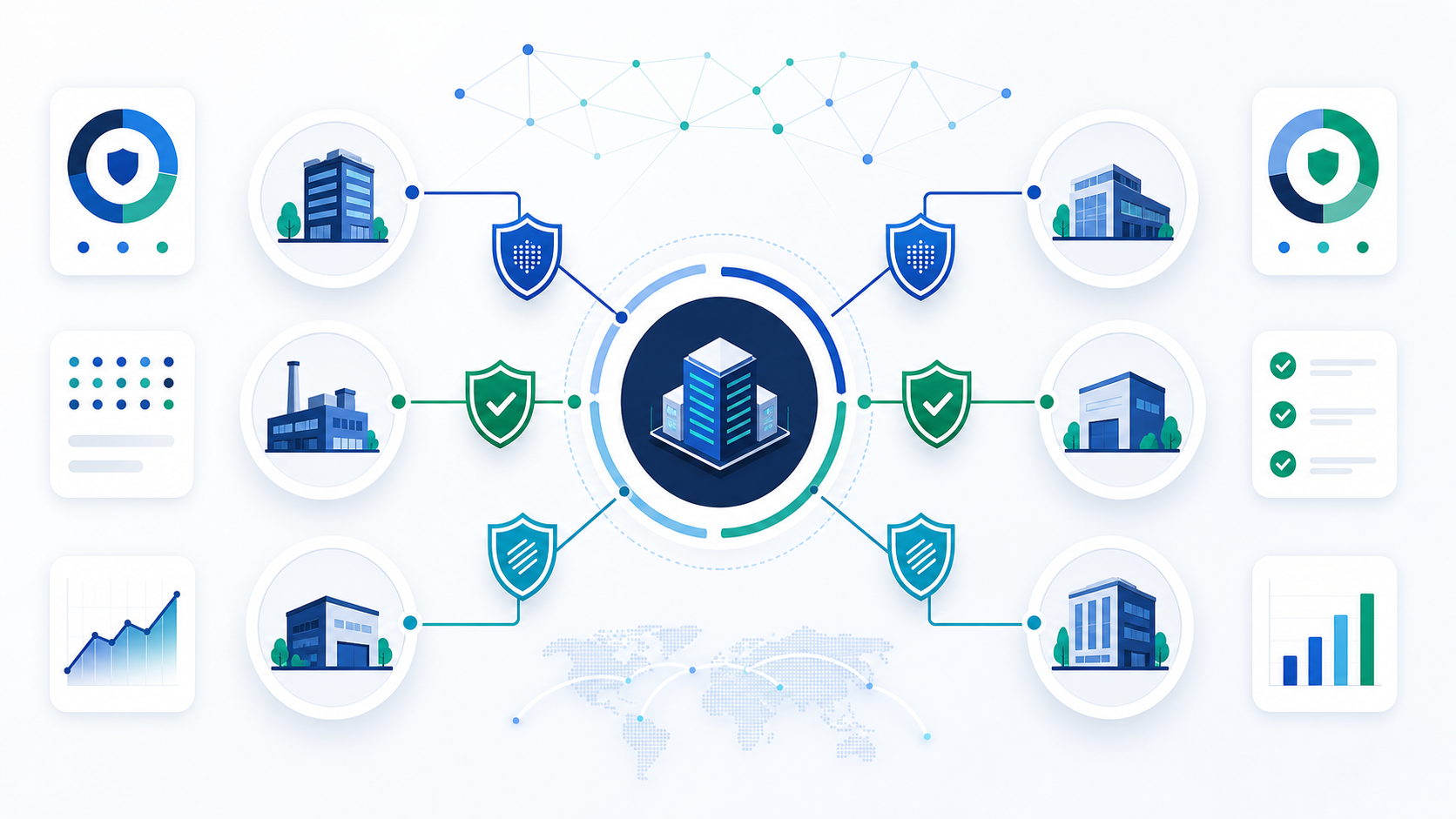
The most efficient path to dual compliance is building a unified control framework — a single master control library where each control is tagged to every applicable framework requirement. Here's how to structure this for PCI-DSS and SOC 2:
Step 1: Define Your Cardholder Data Environment (CDE) and SOC 2 Scope Together
Scope definition is where most dual-compliance programs go wrong. Your PCI-DSS CDE scope and your SOC 2 system description should be defined in parallel. If you can reduce your CDE through tokenization or scope reduction (e.g., using a PCI-compliant payment processor like Stripe or Braintree to handle raw card data), you simultaneously reduce the complexity of your SOC 2 evidence collection. Document your system boundaries once, and reference that documentation in both your PCI-DSS Self-Assessment Questionnaire (SAQ) or Report on Compliance (RoC) and your SOC 2 system description.
Step 2: Build a Unified Policy Library
Your information security policies should be written to satisfy the most demanding requirement across both frameworks. For example, your Access Control Policy should address PCI-DSS Requirement 7's least-privilege mandates and SOC 2 CC6.3's logical access controls simultaneously. Write the policy once, tag it to both frameworks, and maintain a single version. This eliminates the common problem of having a "PCI access control policy" and a separate "SOC 2 access control policy" that drift out of sync over time.
Step 3: Align Evidence Collection Cadences
PCI-DSS requires certain activities on specific schedules (quarterly vulnerability scans, annual penetration tests, semi-annual firewall rule reviews). SOC 2 Type II audits cover a defined period — typically 6 or 12 months — and require evidence that controls operated continuously throughout that period. Design your evidence collection calendar so that PCI-DSS periodic activities generate artifacts that simultaneously serve as SOC 2 operating effectiveness evidence. For example, your quarterly internal vulnerability scan reports become SOC 2 evidence for CC7.1 without any additional work.
Step 4: Implement Continuous Control Monitoring
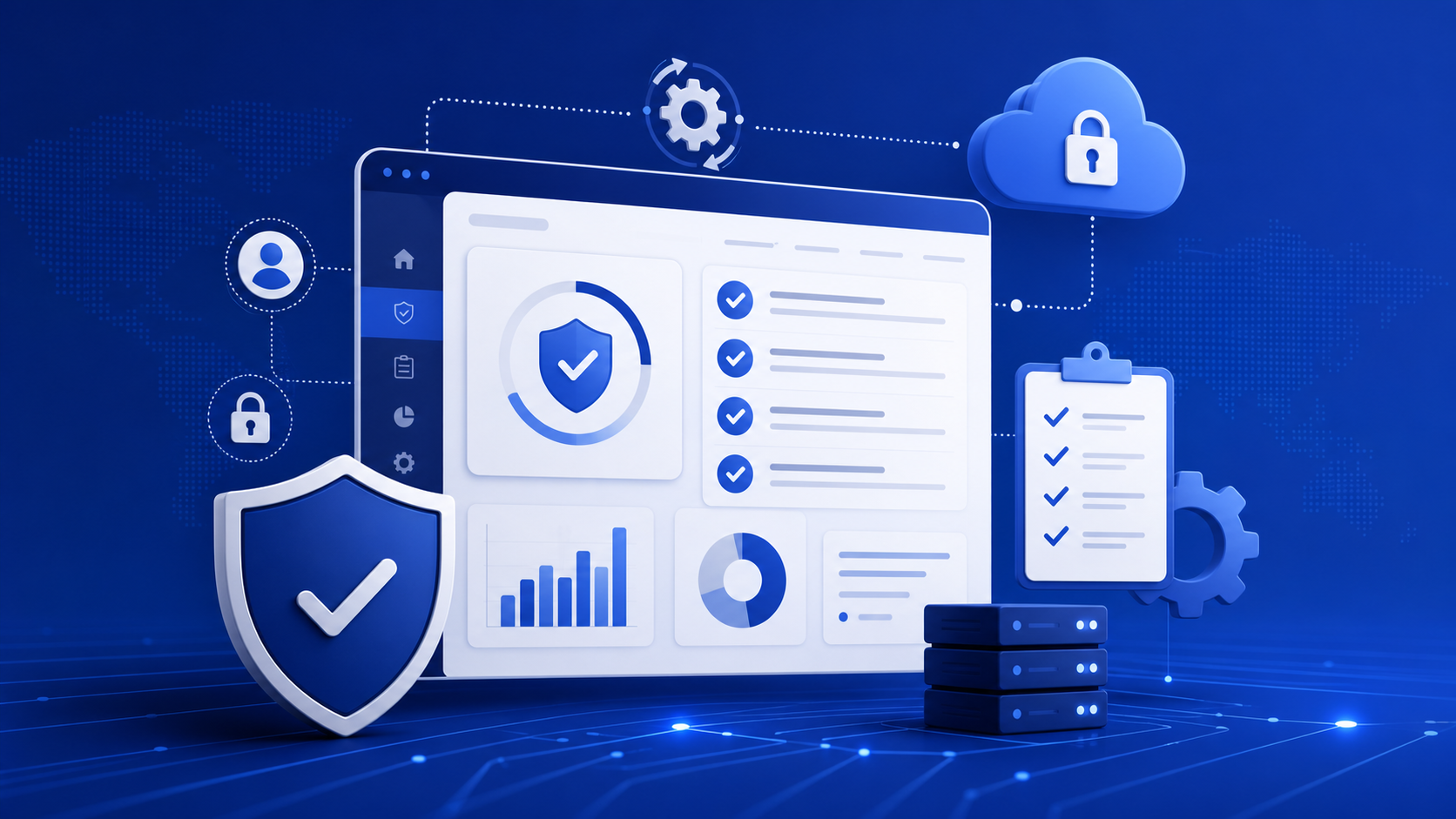
Manual evidence collection is the biggest bottleneck in dual-compliance programs. Platforms like ComplyGuard's automated compliance features continuously monitor your control environment, automatically collect evidence from your cloud infrastructure, and map that evidence to both PCI-DSS and SOC 2 requirements in real time. This eliminates the frantic evidence-gathering sprint that typically precedes audit windows and gives you a live view of your compliance posture across both frameworks.
PCI-DSS SOC 2 Compliance Mapping for Common SaaS Architectures
The practical application of this mapping varies depending on how your SaaS platform interacts with payment card data. Here are the three most common scenarios:
Scenario 1: Redirect/Iframe Payment Model (SAQ A)
If your platform redirects users to a third-party payment page or uses an iframe hosted by your payment processor, you likely qualify for SAQ A — the most limited PCI-DSS scope. In this case, your PCI-DSS obligations are minimal, and your SOC 2 program will be the more demanding framework. Focus your unified control framework on SOC 2 requirements and simply document your SAQ A compliance as a subset.
Scenario 2: JavaScript-Based Payment Forms (SAQ A-EP)
If your pages host JavaScript that calls a payment processor's API, you fall under SAQ A-EP, which includes requirements for web application security, vulnerability scanning, and penetration testing. These requirements map directly to SOC 2 CC6.8 and CC7.1, making this an efficient dual-compliance scenario with moderate additional PCI-DSS overhead.
Scenario 3: Direct Card Data Handling (SAQ D or Full RoC)
If your platform directly processes, stores, or transmits raw cardholder data, you face the full weight of PCI-DSS requirements and will likely need a Qualified Security Assessor (QSA) for a Report on Compliance. This is the most complex dual-compliance scenario, but also where the unified framework approach delivers the greatest ROI — the evidence you collect for your RoC directly accelerates your SOC 2 audit preparation. See how ComplyGuard compares to traditional QSA-led compliance approaches for organizations in this scenario.
Vendor and Subprocessor Management Across Both Frameworks
One of the most underestimated challenges in dual compliance is managing the vendor ecosystem. PCI-DSS Requirement 12.8 requires you to maintain a list of all service providers that could impact the security of cardholder data, obtain their annual compliance acknowledgments, and monitor their compliance status. SOC 2 CC9.2 requires a formal vendor risk management program with risk-based due diligence.
Build a single vendor register that captures:
- Whether the vendor is in scope for PCI-DSS (touches CDE or could impact CDE security)
- Whether the vendor is in scope for SOC 2 (subprocessor for your SOC 2 system)
- The vendor's current compliance certifications (SOC 2 report, PCI-DSS AoC, ISO 27001 certificate)
- Annual review dates and responsible owner
- Risk tier and compensating controls for high-risk vendors
This unified vendor register satisfies both frameworks' documentation requirements and gives your security team a single source of truth for third-party risk. If you're ready to automate this process, contact the ComplyGuard team to see how our vendor risk management module handles dual-framework tagging automatically.
Conclusion
Effective PCI-DSS SOC 2 compliance mapping isn't about doing twice the work — it's about building a smarter compliance architecture from the ground up. By identifying the 60–70% control overlap between the two frameworks, addressing the specific gaps with targeted controls, and implementing continuous monitoring to generate evidence for both simultaneously, SaaS companies can achieve dual compliance faster and at a fraction of the traditional cost. The unified framework approach also creates a more resilient compliance program: when PCI-DSS v4.0 introduces new requirements or the AICPA updates the Trust Services Criteria, your control library adapts once rather than requiring parallel updates across two siloed programs.
ComplyGuard was built specifically for SaaS teams navigating exactly this challenge. Our platform pre-maps controls across PCI-DSS, SOC 2, ISO 27001, HIPAA, and GDPR, automates evidence collection from your existing cloud infrastructure, and generates audit-ready reports that satisfy multiple frameworks simultaneously. Stop running parallel compliance programs and start building a unified compliance posture that scales with your business. Explore ComplyGuard's pricing plans and see how quickly your team can achieve dual compliance — without the consultant fees.