Build a Vendor Risk Management Program for SOC 2, ISO 27001 & HIPAA
Third-party vendors are one of the most overlooked attack surfaces in any organization's security posture—and auditors know it. A robust vendor risk management compliance program is no longer optional if you're pursuing SOC 2, ISO 27001, or HIPAA; it's a core requirement in all three. The good news is that these frameworks share enough common ground that a single, well-designed program can satisfy all of them simultaneously, saving your team hundreds of hours and thousands of dollars in redundant effort.
Why Vendor Risk Management Compliance Matters Across All Three Frameworks
Before diving into the how, it's worth understanding exactly what each framework demands from you when it comes to third parties—and where they overlap.
SOC 2: Vendor Oversight Under the Common Criteria
The AICPA's SOC 2 Trust Services Criteria address vendor risk primarily under CC9.2, which requires organizations to assess and monitor third-party risks that could affect the achievement of service commitments. Auditors will look for evidence that you've identified vendors with access to your systems or data, assessed their controls, and established contractual obligations around security.
ISO 27001: Supplier Relationships in Annex A
ISO 27001:2022 dedicates an entire control category—A.5.19 through A.5.22—to supplier relationships. These controls require you to define an information security policy for suppliers, address security within supplier agreements, manage the supplier service delivery lifecycle, and monitor changes in supplier services. The standard is explicit: security requirements must be agreed upon before a supplier is granted access to your information assets.
HIPAA: Business Associate Agreements and Beyond
Under HIPAA, any vendor that creates, receives, maintains, or transmits Protected Health Information (PHI) on your behalf is a Business Associate (BA). The HHS guidance on Business Associates requires you to execute a Business Associate Agreement (BAA) with each BA, but your obligations don't stop there. You must also conduct reasonable due diligence to ensure BAs have appropriate safeguards in place—a requirement that maps directly to what SOC 2 and ISO 27001 already ask for.
The Unified Vendor Risk Management Compliance Framework: A Step-by-Step Approach
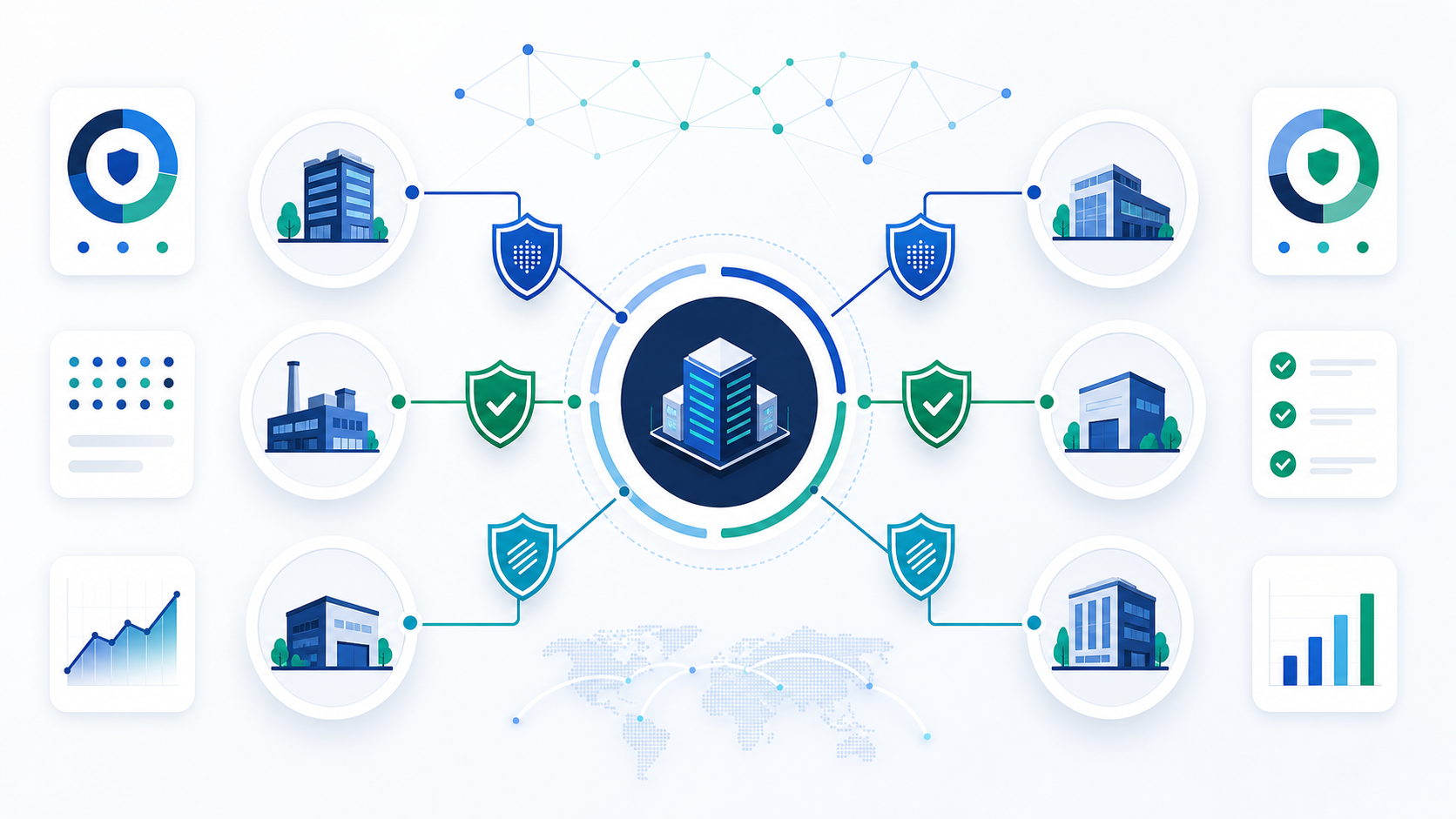
Rather than running three separate vendor review processes, the following approach creates one program with framework-specific checkpoints layered in. This is the methodology we've built into ComplyGuard's automated compliance workflows.
Step 1: Build a Comprehensive Vendor Inventory
You cannot manage risk you haven't identified. Start by cataloging every third party that touches your systems, data, or infrastructure. For each vendor, capture:
- Data access level: Do they process, store, or transmit sensitive data (PII, PHI, cardholder data)?
- System access: Do they have network, application, or physical access to your environment?
- Criticality: Would a failure or breach at this vendor materially impact your operations or customers?
- Regulatory classification: Are they a HIPAA Business Associate, a sub-processor under GDPR, or a service provider under PCI-DSS?
This inventory becomes the foundation for all three frameworks. SOC 2 auditors want to see it. ISO 27001 requires it as part of your asset and supplier register. HIPAA mandates you know who your Business Associates are.
Step 2: Tier Your Vendors by Risk
Not every vendor warrants the same level of scrutiny. A tiering model lets you allocate due diligence resources proportionally:
| Tier | Criteria | Review Frequency | Due Diligence Depth |
|---|---|---|---|
| Tier 1 – Critical | Access to PHI, PII, or core infrastructure; high business impact | Annual + on material change | Full security questionnaire, SOC 2 report review, penetration test evidence, BAA |
| Tier 2 – Significant | Limited data access or indirect system access | Annual | Abbreviated questionnaire, certifications review, contractual security clauses |
| Tier 3 – Low Risk | No data or system access; commodity services | Biennial or on renewal | Self-attestation, standard contract terms |
This tiering approach satisfies the risk-based assessment requirements in all three frameworks without creating an unmanageable review burden.
Step 3: Standardize Your Security Questionnaire
Design a single vendor security questionnaire that covers the control domains required by SOC 2, ISO 27001, and HIPAA simultaneously. Key domains to include:
- Access control and identity management
- Encryption in transit and at rest
- Incident response and breach notification timelines
- Subcontractor and fourth-party management
- Business continuity and disaster recovery
- Security awareness training
- Vulnerability management and patch cadence
- Physical security controls (relevant for ISO 27001 and HIPAA)
Map each question to the specific control it satisfies across frameworks. This mapping is what transforms a generic questionnaire into audit evidence. The NIST Cybersecurity Framework is a useful reference for ensuring comprehensive coverage across these domains.
Step 4: Execute the Right Contracts for Each Framework
Contracts are where framework-specific requirements diverge most sharply. Here's what you need for each:
- SOC 2: Vendor agreements should include security obligations, breach notification requirements (typically 72 hours or less), audit rights, and data handling restrictions. Reference the vendor's SOC 2 report in the agreement where applicable.
- ISO 27001: Supplier agreements must address information security requirements per A.5.20, including confidentiality, data protection, access control obligations, and the right to audit. Document that agreements were reviewed before access was granted.
- HIPAA: A signed BAA is legally required for every Business Associate. The BAA must specify permitted uses of PHI, require appropriate safeguards, mandate breach reporting within 60 days of discovery, and ensure the BA will return or destroy PHI upon contract termination.
The practical approach: create a master vendor security addendum that satisfies SOC 2 and ISO 27001 requirements, then layer a HIPAA BAA on top for any vendor that qualifies as a Business Associate. Most legal teams can maintain two templates rather than three.
Step 5: Conduct and Document Ongoing Monitoring
Initial due diligence is only half the battle. All three frameworks require evidence of ongoing oversight. Build a monitoring cadence that includes:
- Annual re-assessments for Tier 1 and Tier 2 vendors, triggered by contract renewal or material changes in the vendor's services or ownership.
- Continuous monitoring signals: Subscribe to breach notification services, monitor vendor security advisories, and track news of significant incidents at critical vendors.
- SOC 2 report reviews: For vendors who provide SOC 2 Type II reports, review them annually and document any exceptions or gaps that require remediation or compensating controls on your end.
- Offboarding procedures: When a vendor relationship ends, document the return or destruction of data, revocation of access, and termination of agreements. ISO 27001 A.5.20 and HIPAA both require this.
Step 6: Centralize Evidence and Automate Where Possible
The biggest operational challenge in vendor risk management isn't knowing what to do—it's keeping up with the documentation, reminders, and evidence collection across dozens or hundreds of vendors. Manual spreadsheet-based programs inevitably develop gaps that auditors find.
This is where purpose-built compliance platforms make a measurable difference. ComplyGuard's vendor risk management module automates questionnaire distribution, tracks response status, maps vendor controls to SOC 2, ISO 27001, and HIPAA requirements simultaneously, and generates audit-ready evidence packages. Teams that previously spent weeks preparing vendor evidence for audits reduce that effort to hours.
Common Gaps That Derail Vendor Risk Management Compliance Audits
Even well-intentioned programs frequently fail audits due to predictable gaps. Watch out for these:
- Incomplete vendor inventory: Shadow IT and departmental software purchases often introduce vendors that never go through formal review. Implement a procurement policy that routes all new vendor relationships through your risk program before contracts are signed.
- Stale assessments: A SOC 2 report from three years ago or a questionnaire completed before a vendor was acquired by a new parent company is not adequate evidence of current controls.
- Missing BAAs: HIPAA audits frequently uncover Business Associates operating without signed BAAs. Audit your vendor list against your BAA repository at least annually.
- No fourth-party visibility: ISO 27001 and SOC 2 both expect you to understand who your critical vendors rely on. Ask Tier 1 vendors to disclose their significant subcontractors and assess the risk they introduce.
- Undocumented risk acceptance: When a vendor can't meet all your security requirements, you need a documented risk acceptance decision signed by appropriate leadership—not just an informal agreement to proceed.
If you're unsure how your current program stacks up, compare your approach against the compliance benchmarks we've established from hundreds of SMB audits.
Conclusion
Building a vendor risk management compliance program that satisfies SOC 2, ISO 27001, and HIPAA simultaneously is entirely achievable—and far more efficient than running three separate processes. The key is designing your program around a unified inventory, risk-tiered assessments, a cross-framework questionnaire, and layered contractual requirements, then maintaining it with consistent monitoring and centralized documentation. Organizations that take this integrated approach not only pass audits more reliably; they build genuine resilience against the third-party risks that cause the majority of today's data breaches.
Ready to stop managing vendor risk in spreadsheets? Talk to a ComplyGuard compliance specialist or explore our pricing to see how our platform automates vendor assessments, tracks BAAs, and generates audit-ready evidence across SOC 2, ISO 27001, and HIPAA—so your team can focus on running the business, not chasing paperwork.