How to Respond to a Security Questionnaire from an Enterprise Prospect
Landing an enterprise prospect is exciting — until their procurement team sends over a 200-question security questionnaire and your stomach drops. A strong security questionnaire response can be the difference between closing a six-figure deal and losing it to a competitor who had their compliance documentation ready. This guide walks SMBs through exactly how to approach, complete, and submit security questionnaires in a way that builds trust and accelerates the sales cycle.
What Is a Security Questionnaire and Why Do Enterprises Send Them?
A security questionnaire — sometimes called a Vendor Security Assessment (VSA) or Vendor Risk Questionnaire (VRQ) — is a structured set of questions that enterprise buyers use to evaluate the security posture of a potential vendor before sharing data or granting system access. These questionnaires are not bureaucratic box-ticking; they are a core part of enterprise vendor risk management programs, often mandated by frameworks like SOC 2 (AICPA), ISO 27001, HIPAA, and PCI-DSS.
Common questionnaire formats include:
- SIG (Standardized Information Gathering): A comprehensive questionnaire maintained by Shared Assessments, covering 18+ risk domains.
- CAIQ (Consensus Assessments Initiative Questionnaire): Published by the Cloud Security Alliance for cloud vendors.
- Custom enterprise questionnaires: Built internally by the prospect's security or legal team.
- Google VSAQ: An open-source, adaptive questionnaire format used by some tech companies.
Understanding which format you're dealing with shapes how you prepare your response library and which evidence you'll need to surface.
Step-by-Step: Crafting a Winning Security Questionnaire Response
Step 1 — Triage the Questionnaire Before You Answer Anything
Before typing a single answer, spend 30–60 minutes doing a structured triage. Identify:
- Total question count and format (yes/no, free text, evidence upload)
- Deadline and submission method (portal, email, spreadsheet)
- High-risk questions — anything touching encryption, access controls, incident response, or subprocessors deserves extra care
- Questions you cannot answer honestly with a "yes" — these reveal compliance gaps you need to address or explain
Assign ownership immediately. Security questions go to your engineering or IT lead. Legal and data privacy questions go to your counsel or DPO. Business continuity questions may involve operations. Siloed responses create inconsistencies that sharp security reviewers will flag.
Step 2 — Gather Your Evidence Package First
Enterprise reviewers don't just want answers — they want proof. Before writing responses, assemble your evidence library. Common documents you'll need include:
- SOC 2 Type II report (or Type I if Type II isn't yet available)
- Information Security Policy and Acceptable Use Policy
- Penetration test report (typically within the last 12 months)
- Business Continuity and Disaster Recovery (BC/DR) plan
- Data Processing Agreement (DPA) template
- Subprocessor list
- Incident Response Plan
- Employee security training completion records
- Encryption standards documentation
If you're missing several of these, that's a signal your compliance program needs acceleration. Platforms like ComplyGuard automate the generation and maintenance of these policy documents so they're always audit-ready when a questionnaire lands in your inbox.
Step 3 — Answer Accurately, Not Aspirationally
This is where many SMBs make a costly mistake: answering questions based on what they plan to do rather than what they currently do. Enterprise security teams conduct follow-up audits and penetration tests. If your answers don't match reality, you risk contract termination, reputational damage, and potential legal liability.
Best practices for accurate responses:
- Use present tense only for controls that are fully implemented and documented
- For partially implemented controls, say so — and describe your roadmap with a target date
- For gaps, offer compensating controls (alternative measures that reduce the same risk)
- Never answer "N/A" without a brief explanation of why the question doesn't apply to your environment
Honesty paired with a clear remediation plan is far more credible than inflated answers that unravel during due diligence.
Step 4 — Structure Your Responses for Readability
Security reviewers process dozens of vendor questionnaires. Responses that are clear, concise, and well-organized stand out. Follow this structure for free-text answers:
- Direct answer first: Yes, No, or a one-sentence summary of your position
- Supporting detail: How the control works in your environment (2–4 sentences)
- Evidence reference: Point to the specific document or section in your evidence package
Example of a strong response to "Do you encrypt data at rest?":
"Yes. All customer data at rest is encrypted using AES-256. Encryption is enforced at the database level via AWS RDS encryption and at the storage layer via S3 server-side encryption (SSE-S3). Key management is handled through AWS KMS with automatic annual key rotation. See Section 4.2 of our Information Security Policy and our AWS infrastructure diagram in Appendix B."
Step 5 — Build a Reusable Response Library
If you're responding to enterprise questionnaires manually from scratch each time, you're leaving revenue on the table. The average SMB in a growth phase receives 10–30 security questionnaires per year, and the overlap between them is typically 60–80%. Building a centralized response library — a master document mapping common questions to approved, reviewed answers — dramatically reduces turnaround time from weeks to days.
Your response library should include:
- Approved answers for the 50 most common security domains (access control, encryption, logging, incident response, etc.)
- Version-controlled policy documents with effective dates
- A clear owner for each answer who is responsible for keeping it current
- Expiry flags — answers tied to annual pen tests or audits need refreshing on a schedule
ComplyGuard's compliance automation platform includes a built-in questionnaire response module that maps your existing controls to common frameworks and generates pre-approved answer templates, cutting response time by up to 70%.
Step 6 — Handle Sensitive Questions Strategically
Some questions require careful handling rather than a simple yes/no. These typically include:
| Question Type | Recommended Approach |
|---|---|
| Past security incidents or breaches | Disclose accurately; describe containment actions and improvements made |
| Third-party subprocessors with access to customer data | Provide a complete, current list; reference your vendor risk management process |
| Right to audit clauses | Offer your SOC 2 report in lieu of direct audits; negotiate scope if needed |
| Data residency and cross-border transfers | Reference your DPA and applicable transfer mechanisms (SCCs, adequacy decisions) per GDPR requirements |
| Vulnerability management and patch SLAs | Reference your written policy with specific SLA timelines (e.g., critical patches within 24 hours) |
Step 7 — Review, Approve, and Submit with a Cover Note
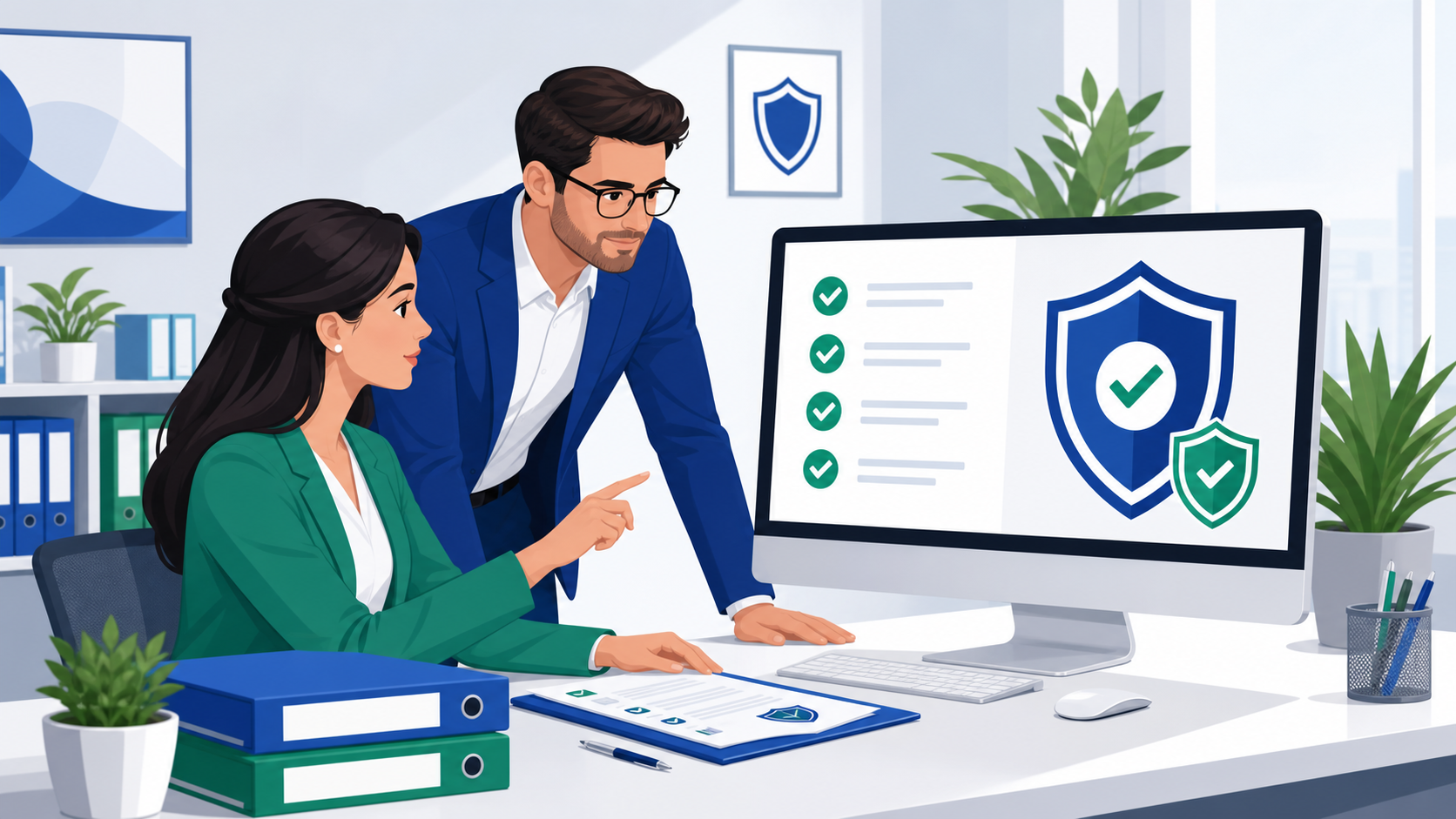
Before submission, conduct a two-person review: one technical reviewer checking accuracy, one business reviewer checking tone and completeness. Common errors to catch:
- Inconsistent answers (e.g., claiming MFA is enforced everywhere but listing exceptions elsewhere)
- Missing evidence attachments referenced in answers
- Outdated document versions (check effective dates)
- Unanswered questions left blank without explanation
Submit with a brief cover note addressed to the security reviewer by name if possible. Acknowledge the questionnaire, confirm your point of contact for follow-up questions, and offer a 30-minute call to walk through any areas requiring clarification. This human touch signals maturity and builds rapport with the prospect's security team.
Common Mistakes That Kill Security Questionnaire Responses
Even well-intentioned SMBs make avoidable errors. Watch out for:
- Treating it as a sales document: Security reviewers are not your audience for marketing language. Be technical and precise.
- Overpromising on certifications: Saying you're "SOC 2 compliant" when you're mid-audit is misleading. Say you're "currently undergoing SOC 2 Type II audit with expected completion in [month]."
- Ignoring the NIST Cybersecurity Framework: Many enterprise questionnaires map to NIST CSF categories. Familiarizing yourself with Identify, Protect, Detect, Respond, and Recover helps you anticipate question patterns.
- No version control on your responses: Sending different answers to different prospects creates legal and reputational risk if discrepancies surface.
- Slow turnaround: Enterprise procurement teams have timelines. A questionnaire that takes three weeks to return signals operational immaturity. Aim for 5–7 business days maximum.
How Compliance Automation Transforms Your Security Questionnaire Response Process
For SMBs without a dedicated security team, the manual effort of responding to security questionnaires is a significant drag on sales velocity. Each questionnaire can consume 20–40 hours of engineering and leadership time — time that isn't being spent building product or serving customers.
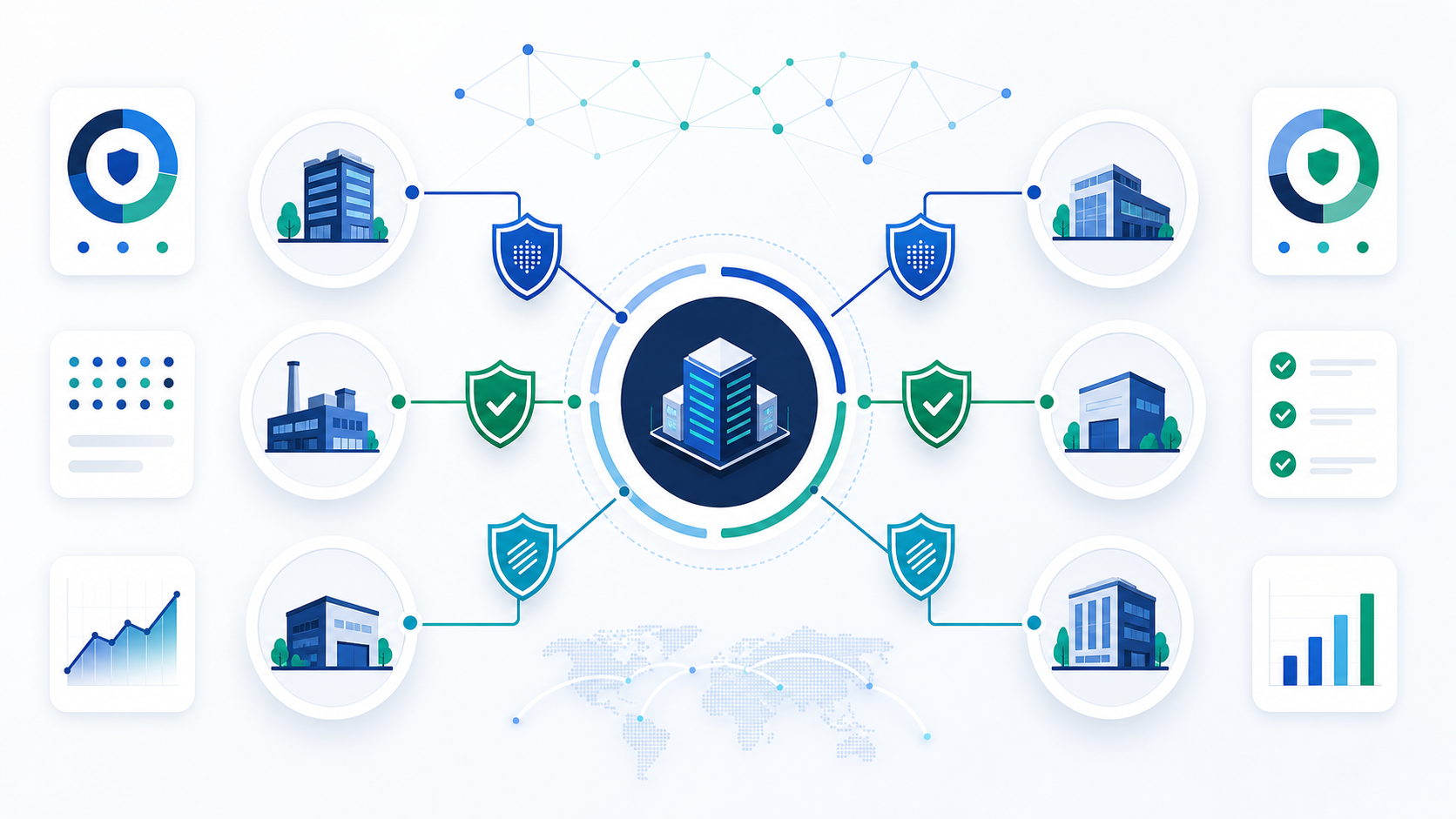
Compliance automation platforms like ComplyGuard change this equation by continuously monitoring your control environment, maintaining up-to-date policy documentation, and mapping your controls to multiple frameworks simultaneously. When a questionnaire arrives, your evidence package is already assembled. See how our approach compares to traditional methods on our comparison page.
The result: faster responses, higher accuracy, and a compliance posture that actually reflects your real security program — not a snapshot you scrambled to assemble under deadline pressure.
Conclusion
A well-executed security questionnaire response is one of the highest-leverage activities in your enterprise sales motion. It signals operational maturity, builds trust with security-conscious buyers, and removes a major friction point from the procurement process. The SMBs that win enterprise deals consistently are the ones that treat compliance as a continuous program — not a fire drill triggered by an incoming questionnaire.
Ready to stop scrambling every time a security questionnaire lands in your inbox? Explore ComplyGuard's plans to see how our compliance automation platform helps SMBs build audit-ready evidence libraries, respond to questionnaires in days instead of weeks, and achieve SOC 2, ISO 27001, HIPAA, and more — without expensive consultants. Or talk to our team to get a personalized walkthrough of how ComplyGuard fits your current compliance stage.