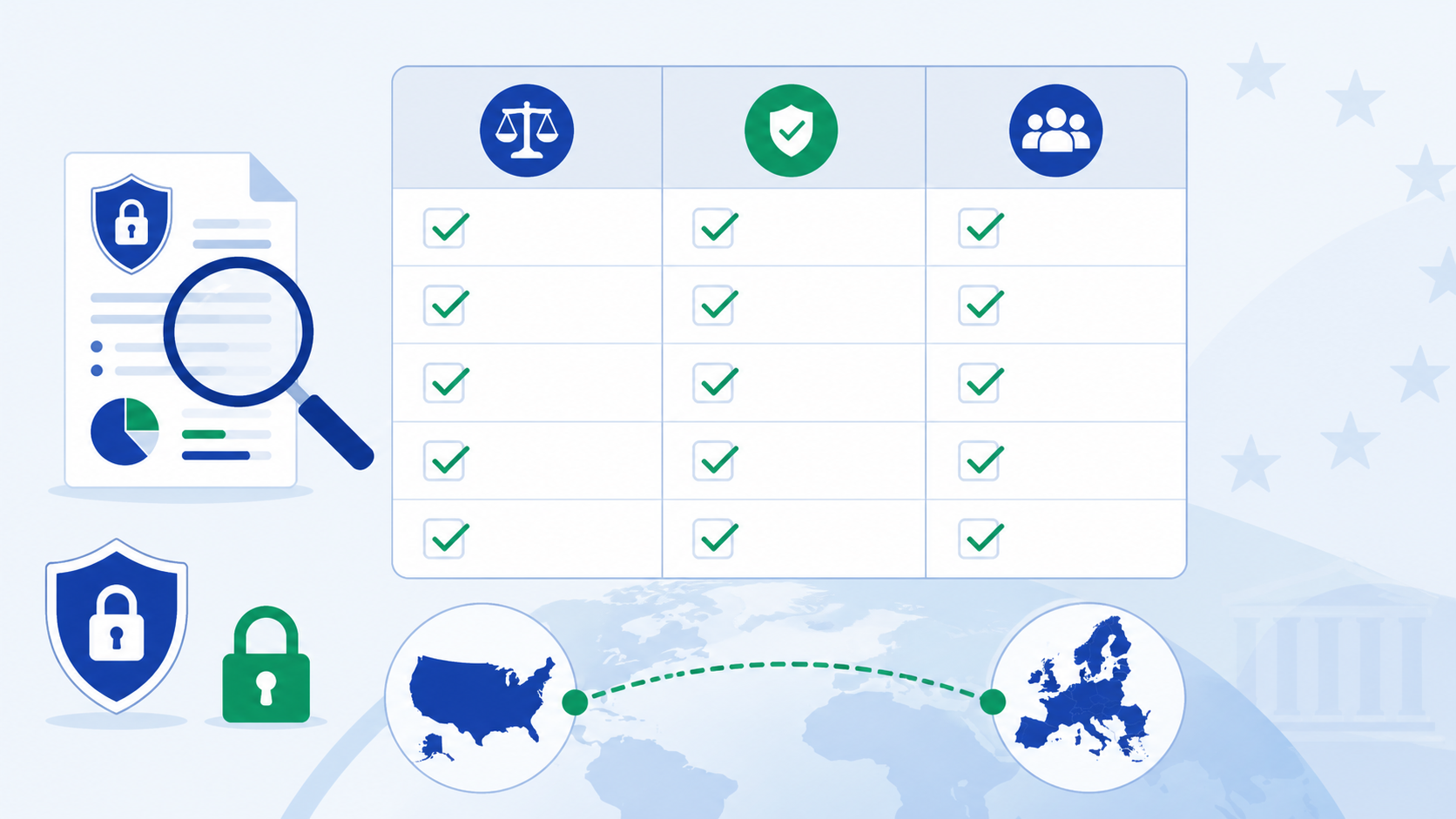
GDPR Data Retention Policy for SaaS: Build & Automate
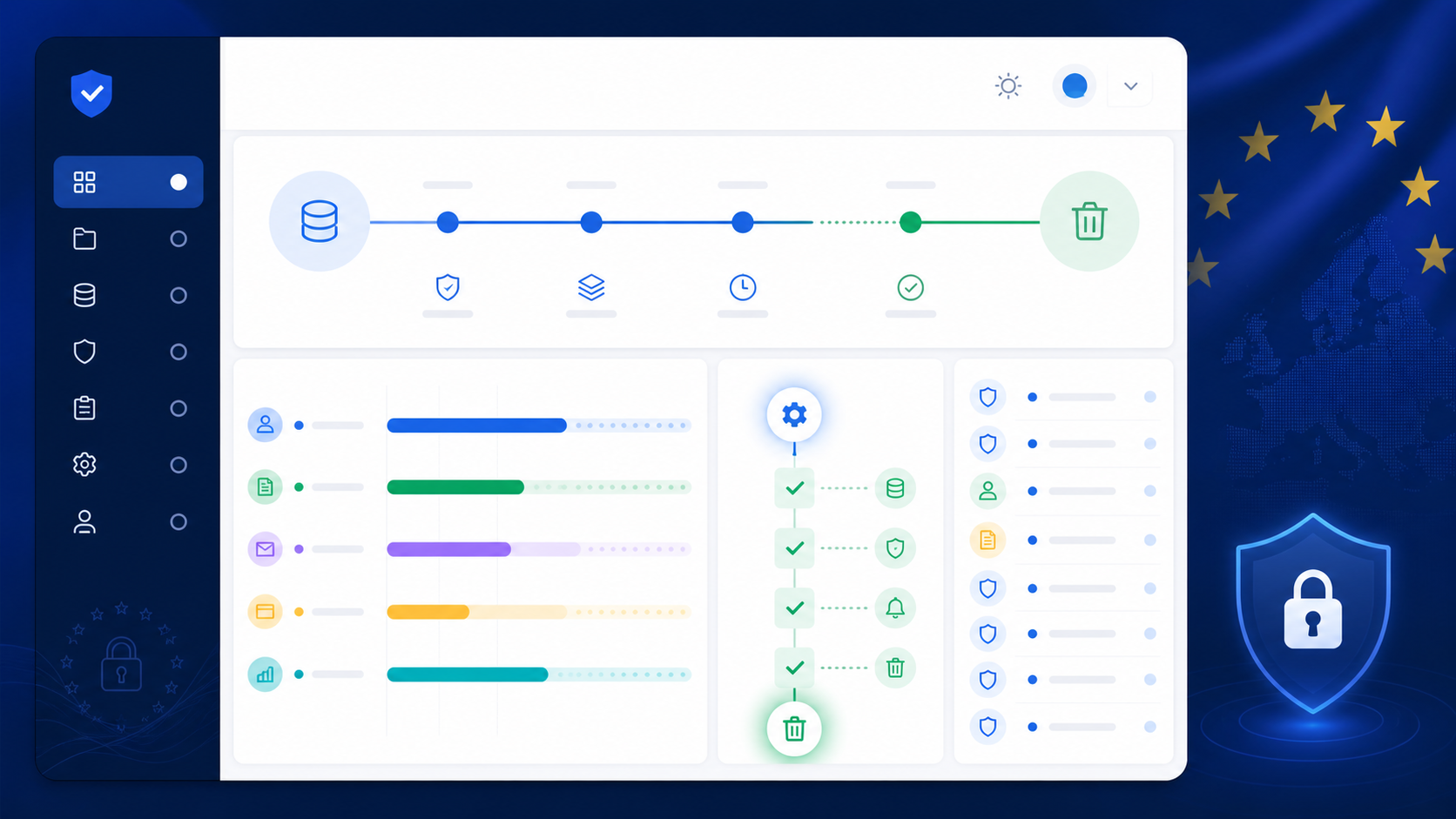
For SaaS companies handling EU personal data, a well-structured GDPR data retention policy for SaaS isn't optional — it's one of the most scrutinized areas during regulatory audits and data subject complaints. Yet most SaaS teams either over-retain data out of caution or delete it arbitrarily without documented justification, both of which create serious legal exposure. This guide walks you through exactly how to build, document, and automate a defensible GDPR-compliant data retention framework that scales with your product.
Why GDPR Data Retention Is a Unique Challenge for SaaS Businesses
Unlike traditional enterprises with monolithic databases, SaaS platforms typically store personal data across multiple layers: application databases, data warehouses, backup systems, logging infrastructure, third-party integrations, and customer-facing exports. Each layer has different retention characteristics, and GDPR's storage limitation principle (Article 5(1)(e)) requires that personal data be kept no longer than necessary for the purpose it was collected.
The challenge is that "necessary" is not a fixed number. It depends on your legal basis for processing, the category of data, applicable sectoral laws, and your contractual obligations to customers. A SaaS company serving healthcare clients in Germany faces different retention obligations than a B2B analytics tool serving UK-based marketing agencies — even if both are subject to GDPR.
Common retention mistakes SaaS companies make include:
- Retaining user account data indefinitely after account deletion requests
- Keeping raw event logs containing personal data for years "just in case"
- Failing to apply retention rules to backup and disaster recovery copies
- Not distinguishing between data retained for legal obligation versus business convenience
- Treating all personal data the same regardless of sensitivity or processing purpose
The GDPR's core data principles under Article 5 make clear that storage limitation is a controller responsibility — meaning your SaaS company, not your cloud provider, is accountable for defining and enforcing retention periods.
Building Your GDPR Data Retention Policy: A Step-by-Step Framework
A defensible GDPR data retention policy for SaaS requires more than a PDF document. It requires a living record tied to your actual data flows, updated as your product evolves. Here's how to build it properly.
Step 1: Complete a Data Inventory and Classification
You cannot set retention periods for data you haven't mapped. Start by building or updating your Record of Processing Activities (RoPA), required under GDPR Article 30. For each data category, document:
- What personal data is collected (name, email, IP address, behavioral data, etc.)
- Where it is stored (primary DB, analytics platform, CRM, backups, logs)
- The legal basis for processing (consent, contract, legitimate interest, legal obligation)
- Who has access (internal teams, sub-processors)
- Whether it involves special category data under Article 9
This inventory becomes the foundation of your retention schedule. Without it, you're guessing — and regulators know when you're guessing.
Step 2: Define Retention Periods by Purpose and Legal Basis
Retention periods must be justified by the purpose of processing, not by technical convenience. The table below provides a practical starting point for common SaaS data categories:
| Data Category | Typical Retention Period | Justification Basis |
|---|---|---|
| Active user account data | Duration of account + 30 days post-deletion request | Contract performance |
| Billing and transaction records | 7 years | Legal obligation (tax/accounting law) |
| Application event logs (with personal data) | 90 days (anonymize or delete after) | Legitimate interest (security monitoring) |
| Marketing consent records | 3 years from last interaction | Legal obligation (demonstrating consent) |
| Support ticket data | 2 years post-ticket closure | Legitimate interest (dispute resolution) |
| Backup copies containing personal data | Aligned with primary retention + deletion cycle | Must mirror primary data policy |
These are starting points — your legal counsel or DPO should validate periods against applicable national laws. For example, German commercial law (HGB) mandates 10-year retention for certain financial records, which overrides a shorter GDPR-based period.
Step 3: Address Backups and Logs Explicitly
This is where most SaaS companies fail. Backup systems are often excluded from retention policies because engineering teams treat them as infrastructure, not data stores. But under GDPR, a backup containing personal data is subject to the same rules as your production database.
Your policy must specify:
- How frequently backups are purged or overwritten
- Whether deleted user data is removed from backups within a defined window (commonly 30–90 days)
- How application and access logs are anonymized or deleted after their retention period
- The process for handling deletion requests when data exists in immutable backup stores
The ENISA guidelines on personal data security for SMEs provide practical technical controls that align well with SaaS backup and log management requirements.
Step 4: Document Your Retention Schedule Formally
Your retention policy document should include:
- A complete retention schedule table (data category → period → legal basis → deletion method)
- Roles and responsibilities (who owns enforcement — typically Engineering + Legal/DPO)
- The process for handling data subject deletion requests (Article 17 right to erasure)
- Exceptions and holds (e.g., litigation holds that pause normal deletion)
- Review cadence (at minimum annually, or when product features change significantly)
- Evidence of policy approval by senior management
This documentation is what you present to a supervisory authority during an investigation. Vague statements like "we delete data when no longer needed" will not satisfy a regulator — specific, justified periods will.
Automating GDPR Data Retention in Your SaaS Stack
Documenting a retention policy is necessary but insufficient. The real compliance risk lies in the gap between your written policy and what your systems actually do. Automation closes that gap.
Technical Controls for Automated Retention Enforcement
Depending on your stack, automated retention enforcement can be implemented through several mechanisms:
- Database TTL (Time-to-Live) fields: Many modern databases (MongoDB, DynamoDB, Redis) support native TTL on records. Set TTL values aligned to your retention schedule at the schema level.
- Scheduled deletion jobs: For relational databases, implement cron jobs or pipeline tasks that identify and delete or anonymize records past their retention date. Log every deletion run for audit purposes.
- Data warehouse partitioning: Partition tables by ingestion date in BigQuery, Snowflake, or Redshift, then drop partitions when they exceed the retention period. This is far more efficient than row-level deletion at scale.
- Log pipeline anonymization: Route application logs through a processing layer (e.g., Datadog, Elastic) that strips or hashes personal identifiers before long-term storage.
- Backup rotation policies: Configure your backup solution (AWS Backup, Google Cloud Backup) with lifecycle rules that automatically expire backup snapshots.
Connecting Deletion Requests to Automated Workflows
When a data subject submits an erasure request under Article 17, your team needs a reliable, auditable process to locate and delete their data across all systems — not just the primary database. This typically requires:
- A centralized intake mechanism for deletion requests (ticketing system, in-app request form)
- A data map that links a user identifier to every system where their data exists
- Automated or semi-automated deletion scripts that execute across all identified systems
- Confirmation logging that records what was deleted, when, and by whom
- A response to the data subject within the 30-day GDPR deadline
Manual processes here are a liability. As your user base grows, the volume of deletion requests grows with it — and missing the 30-day window is a reportable compliance failure.
Using Compliance Automation Platforms to Manage Retention Evidence
Beyond the technical controls, you need to demonstrate to auditors and customers that your retention policy is actively enforced. This is where compliance automation platforms like ComplyGuard's automated evidence collection become operationally valuable. Rather than manually compiling screenshots and spreadsheets before each audit, ComplyGuard continuously monitors your controls, flags policy gaps, and maintains a timestamped evidence trail that maps directly to GDPR requirements.
For SaaS companies managing multiple compliance frameworks simultaneously — GDPR alongside SOC 2 or ISO 27001 — this cross-framework approach is particularly efficient, since data retention controls often satisfy requirements across multiple standards at once. You can compare how ComplyGuard handles multi-framework compliance against point solutions to understand the operational difference.
GDPR Data Retention Policy for SaaS: Governance and Ongoing Maintenance
A retention policy written once and forgotten is a compliance liability, not an asset. GDPR requires that your processing activities remain accurate and up to date — which means your retention schedule must evolve as your product does.
Assign Clear Ownership
Retention policy enforcement typically falls between Legal, Engineering, and Security teams, which means it often falls through the cracks. Designate a specific owner (your DPO, Head of Security, or VP Engineering) who is accountable for:
- Annual policy review and updates
- Reviewing new product features for data retention implications before launch
- Monitoring deletion job execution and investigating failures
- Responding to data subject requests within statutory deadlines
Conduct Regular Retention Audits
At least annually, run a retention audit that compares your documented retention schedule against what data actually exists in your systems. Spot-check whether records past their retention date have been deleted. Review whether any new data categories introduced in the past year have been added to the schedule.
The NIST Privacy Framework provides a useful governance structure for operationalizing these ongoing privacy management activities, including data lifecycle controls that align well with GDPR's storage limitation requirements.
Train Your Team
Engineers building new features need to understand that every new data field they add to a schema has retention implications. Product managers need to consider data minimization before specifying new analytics requirements. A brief, role-specific training on your retention policy — documented and repeated annually — is both a GDPR requirement and a practical risk reduction measure.
Conclusion
Building a defensible GDPR data retention policy for SaaS requires three things working together: a thorough data inventory, a formally documented retention schedule with justified periods, and automated technical controls that enforce deletion consistently across every system where personal data lives. The companies that get this right treat retention not as a legal checkbox but as an engineering discipline — one that reduces storage costs, limits breach exposure, and builds genuine trust with enterprise customers who scrutinize your data practices before signing contracts.
If your SaaS company is still managing GDPR retention through spreadsheets and manual processes, the operational risk grows with every new user you onboard. ComplyGuard automates the evidence collection, policy management, and control monitoring that makes GDPR compliance sustainable at scale — without the cost of a full-time compliance team or expensive external consultants. Talk to our compliance team today to see how ComplyGuard can help you build and automate your GDPR data retention framework, or explore our pricing to find the right plan for your SaaS business.