ISO 27001 Internal Audit: A Step-by-Step Guide for SMBs
An ISO 27001 internal audit is one of the most critical — and most misunderstood — requirements for small and mid-sized businesses pursuing or maintaining certification. Done right, it's not just a checkbox exercise; it's a structured opportunity to identify real security gaps before an external auditor does. This guide walks you through every stage of the process, from planning through reporting, with practical advice tailored specifically for SMBs operating without a dedicated compliance team.
What Is an ISO 27001 Internal Audit and Why Does It Matter?
Under ISO/IEC 27001:2022, Clause 9.2 mandates that organizations conduct internal audits at planned intervals to determine whether their Information Security Management System (ISMS) conforms to the standard's requirements and is effectively implemented and maintained. This isn't optional — it's a prerequisite for certification and a condition for maintaining it.
For SMBs, the internal audit serves three practical purposes:
- Readiness verification: It confirms your ISMS is actually working, not just documented on paper.
- Risk reduction: It surfaces nonconformities and vulnerabilities before your Stage 2 certification audit or annual surveillance audit.
- Continuous improvement: It feeds directly into your management review process, driving measurable security improvements over time.
Many SMBs make the mistake of treating the internal audit as a formality. External auditors can tell immediately when an internal audit was rushed or superficial — and it raises serious questions about the maturity of your ISMS.
Step 1: Establish Your ISO 27001 Internal Audit Program
Before you schedule a single interview or review a single policy, you need a documented audit program. This is the overarching plan that governs how internal audits are conducted across your organization over time — typically covering a 12-month cycle.
Define the Audit Scope
Your audit scope should align with your ISMS scope, which you defined during implementation. This typically includes:
- Specific business units, locations, or systems covered by the ISMS
- The information assets and processes within scope
- Applicable Annex A controls from ISO 27001:2022 (93 controls across four themes)
For SMBs, the ISMS scope is often the entire organization, which simplifies scoping but increases the volume of controls to audit. Be explicit about what's in and out of scope in your audit plan document.
Assign a Qualified Internal Auditor
ISO 27001 requires that auditors be objective and impartial — meaning you cannot audit your own work. For SMBs, this creates a practical challenge. Common solutions include:
- Cross-training a team member from a different department to conduct audits
- Engaging a part-time virtual CISO or compliance consultant for the audit function
- Using a compliance automation platform like ComplyGuard, which provides built-in audit workflows and evidence collection that reduce the burden on internal staff
Auditor competence matters. The person conducting the audit should understand ISO 27001 requirements, basic information security principles, and audit techniques such as interviewing, observation, and document review.
Set the Audit Frequency
The standard says "at planned intervals" — it doesn't mandate annual audits, but annual is the industry norm and what most certification bodies expect. High-risk areas or controls with a history of nonconformities should be audited more frequently. Document your rationale for the frequency you choose.
Step 2: Develop a Detailed Audit Plan
The audit program is the big picture; the audit plan is the operational document for a specific audit cycle. Your audit plan should include:
- Audit objectives (e.g., verify conformance with Clause 6.1 risk assessment requirements)
- Audit criteria (ISO 27001:2022 clauses, your ISMS policies, and applicable Annex A controls)
- Audit methods (document review, staff interviews, technical testing, observation)
- Schedule and timeline with specific dates for each audit activity
- Names of auditees and their roles
- Resources required, including tools and templates
Distribute the audit plan to relevant stakeholders at least two weeks before the audit begins. This gives department heads time to prepare evidence and reduces the disruption to daily operations.
Step 3: Prepare Your Audit Checklists
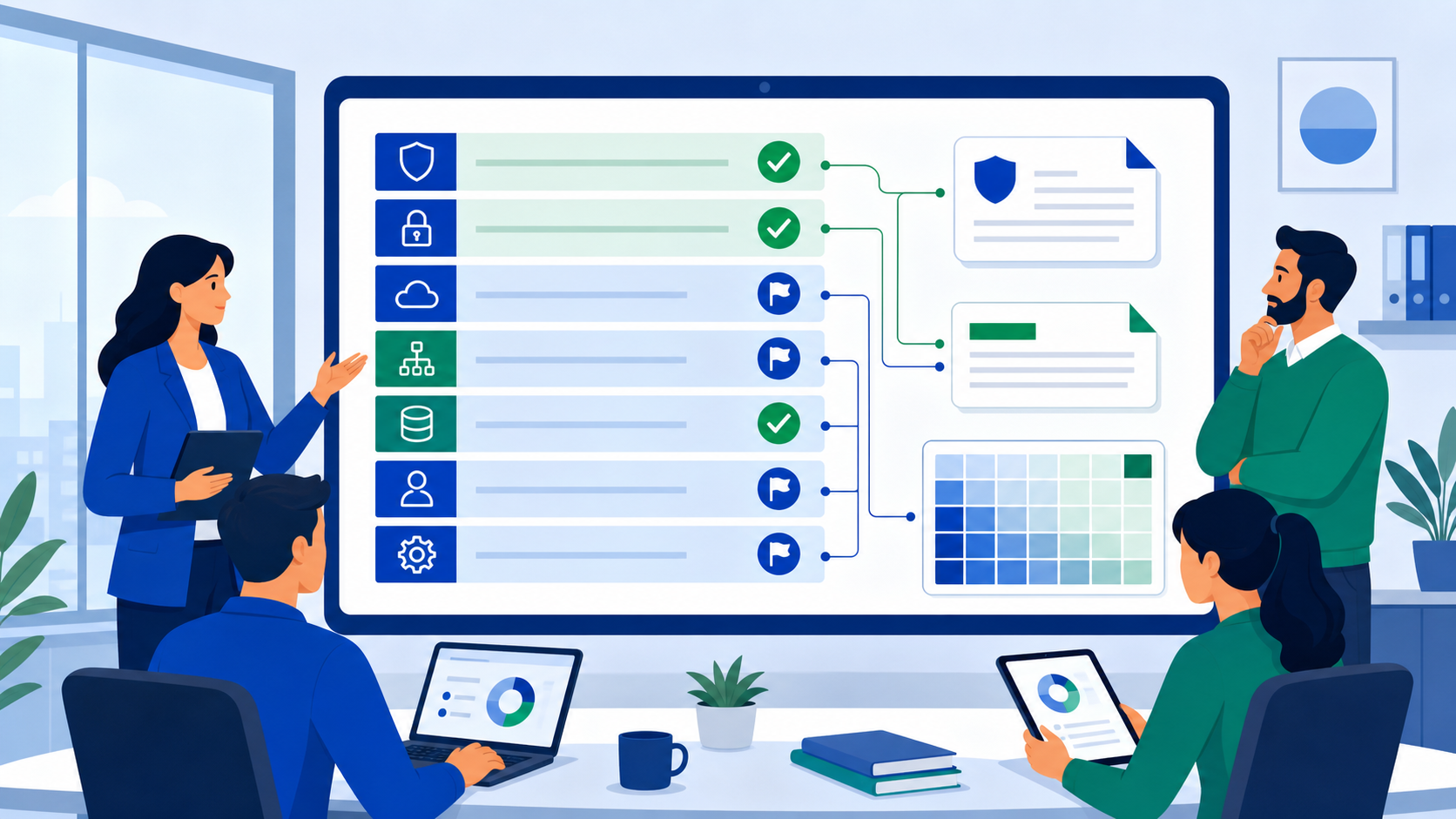
A well-constructed checklist is the backbone of an effective ISO 27001 internal audit. Your checklist should map directly to the clauses and controls you're auditing. For ISO 27001:2022, this means covering:
| Audit Area | ISO 27001:2022 Reference | Example Audit Questions |
|---|---|---|
| Context of the Organization | Clause 4 | Has the organization identified internal and external issues relevant to the ISMS? Are interested parties documented? |
| Risk Assessment & Treatment | Clause 6.1 | Is there a documented risk assessment methodology? Are risks reviewed at planned intervals? |
| Asset Management | Annex A 5.9–5.14 | Is an asset inventory maintained and current? Are assets classified according to policy? |
| Access Control | Annex A 5.15–5.18 | Are access rights reviewed periodically? Is least privilege enforced? |
| Incident Management | Annex A 5.24–5.28 | Are security incidents logged and investigated? Is there evidence of lessons learned? |
| Supplier Relationships | Annex A 5.19–5.22 | Are supplier security requirements documented in contracts? Are suppliers assessed regularly? |
Don't rely on generic checklists downloaded from the internet. Customize your checklist to reflect your specific ISMS policies, your Statement of Applicability (SoA), and any exclusions you've documented.
Step 4: Conduct the Audit — Gathering Evidence
The fieldwork phase is where most of the actual audit work happens. Effective evidence gathering uses three primary methods:
Document Review
Request and review key ISMS documents, including your information security policy, risk register, risk treatment plan, Statement of Applicability, business continuity plans, and records of management reviews. Look for version control, approval signatures, and evidence that documents are actually used — not just filed away.
Staff Interviews
Interview employees at multiple levels — from the CISO or IT manager down to individual contributors who handle sensitive data. Ask open-ended questions. If your policy says all staff complete annual security awareness training, ask an employee when they last completed it and what it covered. Discrepancies between policy and practice are your most valuable findings.
Technical Observation and Testing
Where possible, verify controls through direct observation. Check that multi-factor authentication is actually enforced on critical systems. Review access logs to confirm that terminated employees' accounts were disabled promptly. Spot-check patch management records against your policy's required timelines.
Document every piece of evidence you collect — screenshots, document references, interview notes, and system outputs. This documentation is what you'll present to your certification body if questioned about your internal audit process.
Step 5: Identify and Classify Findings
Not all audit findings are equal. ISO 27001 internal audits typically classify findings into three categories:
- Major Nonconformity: A complete failure to implement a required control or clause, or a systemic breakdown that puts the ISMS at significant risk. Example: No risk assessment has ever been conducted.
- Minor Nonconformity: An isolated lapse or partial implementation of a requirement. Example: Risk assessments are conducted but not at the documented annual frequency.
- Observation / Opportunity for Improvement: A weakness that doesn't yet constitute a nonconformity but could become one. Example: Access reviews are conducted but not formally documented.
Be honest in your classification. Downgrading a major nonconformity to a minor one to avoid difficult conversations will backfire when your external auditor finds the same issue — and they will.
Step 6: Write the Internal Audit Report
Your audit report is the formal output of the entire process. It should be clear, factual, and actionable. A well-structured ISO 27001 internal audit report includes:
- Executive Summary: High-level overview of audit scope, objectives, and overall ISMS health
- Audit Methodology: Methods used, dates of fieldwork, and personnel interviewed
- Findings Summary: Total number of major nonconformities, minor nonconformities, and observations
- Detailed Findings: Each finding with the specific clause or control reference, evidence collected, and risk implication
- Corrective Action Recommendations: Suggested remediation steps with proposed owners and target dates
- Conclusion: Overall conformance assessment
The report must be retained as documented information — it's evidence that you've fulfilled the Clause 9.2 requirement. Store it securely and make it accessible for your certification body's review.
Step 7: Drive Corrective Actions and Close the Loop
An audit report that sits in a folder accomplishes nothing. Every nonconformity must trigger a formal corrective action process under Clause 10.1. This means:
- Assigning a named owner for each corrective action
- Conducting root cause analysis — not just fixing the symptom
- Implementing the corrective action within an agreed timeframe
- Verifying effectiveness through follow-up review
- Updating your risk register if the finding reveals a previously unidentified risk
The results of your internal audit and corrective actions must also be presented at your management review (Clause 9.3). This is how the internal audit feeds into the broader continual improvement cycle that ISO 27001 is built around.
Platforms like ComplyGuard automate much of this corrective action tracking, sending reminders to owners, logging evidence of completion, and generating audit-ready reports — which is particularly valuable for SMBs where compliance responsibilities are spread across a small team. You can compare how ComplyGuard stacks up against manual compliance approaches to see the time and cost savings in practice.
Common ISO 27001 Internal Audit Mistakes SMBs Make
Understanding what goes wrong helps you avoid the same pitfalls:
- Auditing only documentation, not implementation: Having a policy is not the same as following it. Always verify that controls are operational.
- Insufficient auditor independence: Allowing people to audit their own processes invalidates the audit's objectivity.
- Failing to cover all Annex A controls: Your SoA defines which controls apply. Every applicable control must be audited over your audit cycle.
- No follow-up on prior findings: Repeat findings signal to external auditors that your corrective action process is ineffective.
- Poor evidence retention: If you can't produce evidence during your certification audit, the control is treated as if it doesn't exist.
The ISO 27001 standard itself and guidance from bodies like NIST consistently emphasize that the quality of internal audit processes is a leading indicator of overall ISMS maturity.
Conclusion
A rigorous ISO 27001 internal audit is not just a compliance obligation — it's one of the most valuable security investments an SMB can make. By following a structured approach from program planning through corrective action closure, you build an ISMS that actually protects your business and stands up to external scrutiny. The process requires discipline, honest assessment, and consistent follow-through, but the payoff is a stronger security posture and a smoother path to certification.
If your team is stretched thin and you're looking for a smarter way to manage your ISO 27001 internal audit process, ComplyGuard can help. Our platform automates evidence collection, audit scheduling, corrective action tracking, and report generation — cutting the time and cost of compliance dramatically. Explore our pricing plans to find the right fit for your organization, or talk to a compliance specialist today to see how ComplyGuard can get you audit-ready faster than you thought possible.