ISO 27001 Certification Cost Breakdown: What SMBs Actually Pay in 2025
If you've started researching ISO 27001 certification cost, you've probably encountered a frustratingly wide range of numbers—anywhere from $15,000 to well over $100,000. The truth is, what your organization actually pays depends on a handful of specific variables, and most guides gloss over the details that matter most to small and mid-sized businesses. This article breaks down every cost layer SMBs face in 2025, explains what drives price differences, and shows you where smart automation can dramatically cut your bill.
Why ISO 27001 Certification Cost Varies So Dramatically
ISO 27001 is the internationally recognized standard for Information Security Management Systems (ISMS), published by the International Organization for Standardization. Unlike a simple checklist audit, it requires organizations to design, implement, operate, and continually improve a comprehensive security management framework. That scope means costs scale with your organization's complexity.
The four primary factors that move the needle on price are:
- Company size and headcount — Audit fees are often tiered by employee count or number of locations.
- Scope of the ISMS — Certifying one product line costs far less than certifying your entire organization.
- Current security maturity — Organizations starting from scratch spend significantly more on remediation than those with existing controls.
- Implementation approach — DIY, consultant-led, or platform-assisted implementations carry very different price tags.
The Full ISO 27001 Certification Cost Breakdown for SMBs
Below is a realistic, itemized view of what SMBs with 10–200 employees typically spend in 2025. These figures reflect current market rates and are not the optimistic low-end estimates you'll find in vendor marketing materials.
1. Gap Assessment: $3,000–$15,000
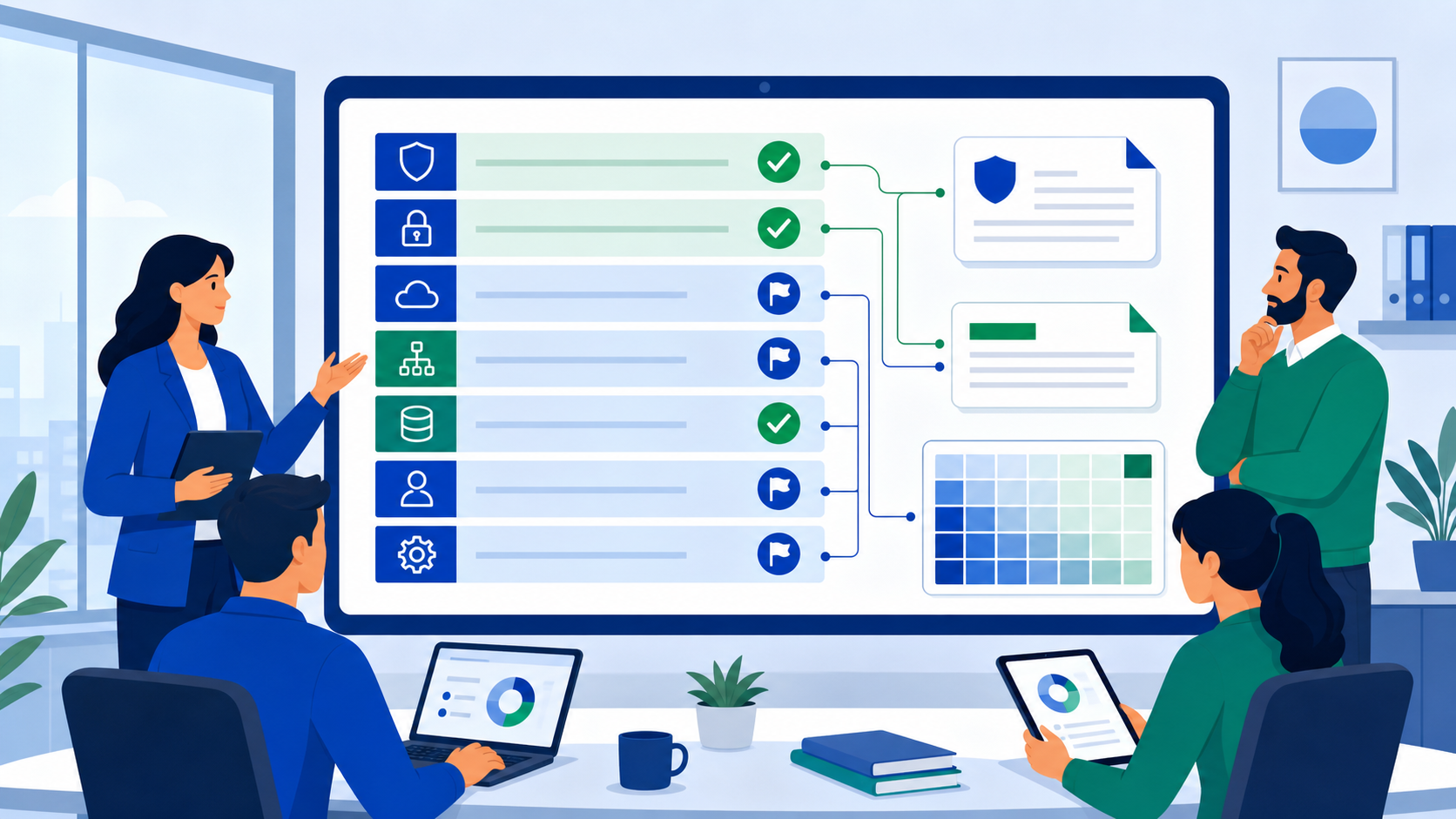
Before you can build your ISMS, you need to know where you stand. A gap assessment compares your current controls against the 93 controls in Annex A of ISO 27001:2022. If you hire an external consultant, expect to pay $3,000–$8,000 for a small company and up to $15,000 for a mid-sized organization with complex infrastructure. Platforms like ComplyGuard automate this step with AI-driven assessments that surface gaps in hours rather than weeks, dramatically reducing this line item.
2. ISMS Implementation and Documentation: $8,000–$40,000
This is typically the largest cost bucket. It covers:
- Writing and formalizing policies (Information Security Policy, Acceptable Use, Access Control, etc.)
- Conducting a formal risk assessment and producing a Statement of Applicability (SoA)
- Implementing technical controls (encryption, logging, vulnerability management)
- Building evidence collection workflows and asset inventories
- Staff awareness training
Consultant-led implementations for a 50-person company typically run $20,000–$40,000 in labor alone. A compliance automation platform can compress this to $8,000–$15,000 in combined platform and internal labor costs by providing pre-built policy templates, automated evidence collection, and guided control implementation.
3. Internal Labor Costs: $10,000–$30,000
This is the hidden cost most budget guides ignore. Someone inside your organization—usually a security lead, IT manager, or operations director—will spend significant time on this project. For a typical SMB implementation running 4–6 months, expect 200–400 hours of internal staff time. At a fully-loaded cost of $75–$100/hour, that's $15,000–$40,000 in opportunity cost. Automation tools that handle evidence collection, policy versioning, and audit prep directly reduce this burden.
4. External Audit Fees (Stage 1 + Stage 2): $8,000–$25,000
ISO 27001 certification requires a two-stage audit by an accredited Certification Body (CB). Stage 1 is a documentation review; Stage 2 is an on-site (or remote) assessment of your implemented controls.
| Company Size | Stage 1 Audit | Stage 2 Audit | Total Audit Cost |
|---|---|---|---|
| 1–25 employees | $2,000–$4,000 | $5,000–$8,000 | $7,000–$12,000 |
| 26–100 employees | $3,500–$6,000 | $7,000–$12,000 | $10,500–$18,000 |
| 101–250 employees | $5,000–$8,000 | $10,000–$17,000 | $15,000–$25,000 |
Audit fees vary by certification body, geographic location, and whether audits are conducted remotely or on-site. Remote audits, which became standard post-pandemic, are generally 15–25% cheaper. Always get quotes from at least three accredited CBs—pricing is not standardized.
5. Surveillance Audits (Years 2 and 3): $4,000–$10,000/year
ISO 27001 certification is valid for three years, but it requires annual surveillance audits to maintain. These are lighter-touch reviews that verify your ISMS is still operating effectively. Budget $4,000–$10,000 per year depending on your CB and scope. At the end of year three, a full recertification audit is required, which costs roughly the same as the initial Stage 1 + Stage 2 combined.
6. Tooling and Technology: $3,000–$20,000/year
You'll need tools to support your ISMS on an ongoing basis. This typically includes:
- Vulnerability scanning and patch management software
- Security information and event management (SIEM) or log management
- Endpoint detection and response (EDR)
- A GRC (Governance, Risk, and Compliance) platform for evidence management
Many SMBs already have some of these tools. A compliance automation platform like ComplyGuard consolidates GRC functionality—policy management, risk registers, evidence collection, and audit readiness dashboards—into a single subscription, often replacing multiple point solutions. See our pricing page to understand how this compares to building a tool stack from scratch.
Total ISO 27001 Certification Cost: Realistic Ranges for SMBs
Pulling it all together, here's what SMBs realistically spend in year one:
| Approach | Year 1 Total Cost | Best For |
|---|---|---|
| DIY (no external help) | $20,000–$45,000 | Teams with strong in-house security expertise |
| Consultant-led | $50,000–$120,000 | Organizations with budget and minimal internal bandwidth |
| Compliance platform (e.g., ComplyGuard) | $25,000–$55,000 | SMBs wanting speed, structure, and cost efficiency |
These ranges include audit fees, internal labor, tooling, and implementation costs. They exclude any major infrastructure upgrades your gap assessment might uncover—those costs are unique to your environment.
Hidden Costs SMBs Frequently Underestimate
Beyond the obvious line items, several costs catch SMBs off guard:
- Remediation of findings: If your gap assessment reveals significant control deficiencies—weak access controls, no formal incident response plan, unencrypted data stores—fixing them costs money. Budget a contingency of 15–25% of your implementation estimate.
- Legal and contractual review: ISO 27001 requires supplier agreements and data processing contracts to reflect security requirements. Legal review of these documents can add $2,000–$8,000.
- Employee training programs: Awareness training isn't optional under ISO 27001. Off-the-shelf platforms cost $500–$3,000/year; custom programs cost more.
- Scope creep: Starting with a narrow ISMS scope and expanding it mid-project is one of the most common budget killers. Define your scope precisely before you begin.
How to Reduce Your ISO 27001 Certification Cost Without Cutting Corners
Certification bodies and auditors cannot be negotiated down significantly—their fees reflect real audit hours. But the implementation side of the equation is highly compressible. Here's how smart SMBs reduce costs:
- Use automation for evidence collection. Manual evidence gathering is the single biggest time sink in any compliance project. Platforms that integrate with your cloud infrastructure (AWS, Azure, GCP), identity providers, and SaaS tools can collect and organize evidence automatically.
- Start with a narrow, well-defined scope. Certifying your core product or a single business unit first is faster and cheaper. You can expand scope at recertification.
- Leverage pre-built policy templates. Writing policies from scratch is expensive. Vetted, ISO 27001:2022-aligned templates cut documentation time by 60–70%.
- Choose a remote-friendly certification body. Remote audits save travel costs and auditor time, which translates directly to lower fees.
- Compare multiple certification bodies. The ISO website provides guidance on selecting accredited CBs. Prices for equivalent scope can vary by 30–40% between providers.
If you're also evaluating how ISO 27001 stacks up against other frameworks like SOC 2 or GDPR in terms of cost and effort, our framework comparison tool can help you make an informed decision based on your customer requirements and risk profile.
Is ISO 27001 Worth the Cost for SMBs?
For SMBs selling to enterprise customers, operating in regulated industries, or handling sensitive personal data, the ROI calculation is straightforward. ISO 27001 certification:
- Removes a major procurement barrier—many enterprise buyers require it or use it as a strong differentiator
- Reduces the cost and frequency of customer security questionnaires
- Lowers cyber insurance premiums (typically 10–25% reductions for certified organizations)
- Provides a structured framework that reduces the likelihood and cost of security incidents
- Signals trust to prospects, partners, and regulators
The ISO 27001 standard is recognized in over 150 countries, making it particularly valuable for SMBs with international customers or expansion ambitions. When a single enterprise contract is worth $200,000+, a $40,000 certification investment pays for itself quickly.
Conclusion
Understanding the true ISO 27001 certification cost means looking beyond the audit invoice to account for implementation labor, internal time, tooling, and ongoing surveillance. For most SMBs in 2025, a realistic year-one budget falls between $25,000 and $55,000 when using a compliance automation platform—significantly less than the $50,000–$120,000 consultant-led path, and with a faster timeline to certification. The key is choosing an approach that eliminates manual busywork without sacrificing audit quality. ComplyGuard is built specifically for this: AI-driven gap assessments, automated evidence collection, pre-built ISO 27001:2022 policy templates, and a real-time audit readiness dashboard that keeps you on track from day one. Talk to our team to get a personalized cost estimate for your organization, or explore our pricing plans to see how ComplyGuard compares to hiring a consultant.