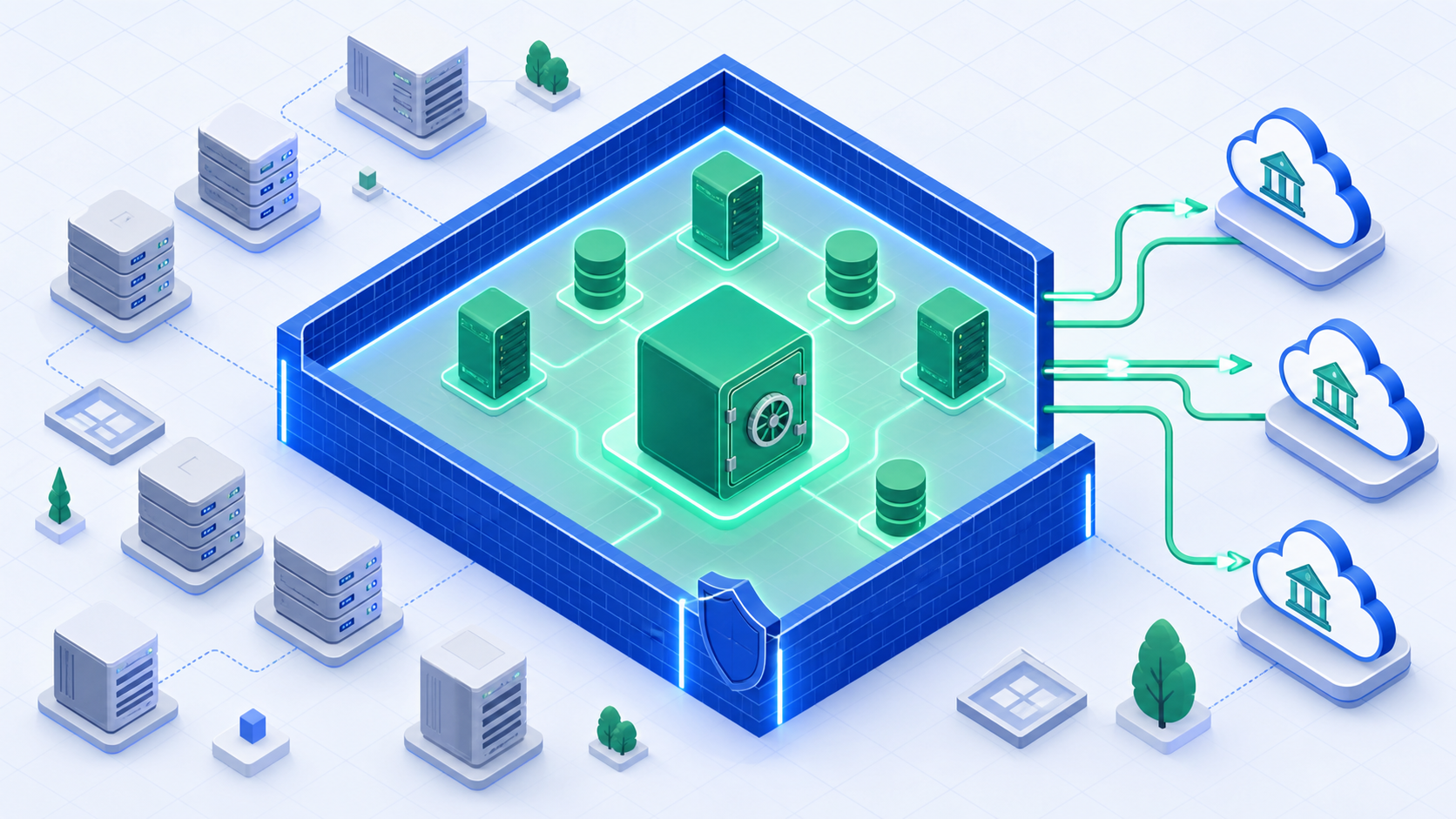
PCI-DSS Cardholder Data Environment Scope: Step-by-Step Guide
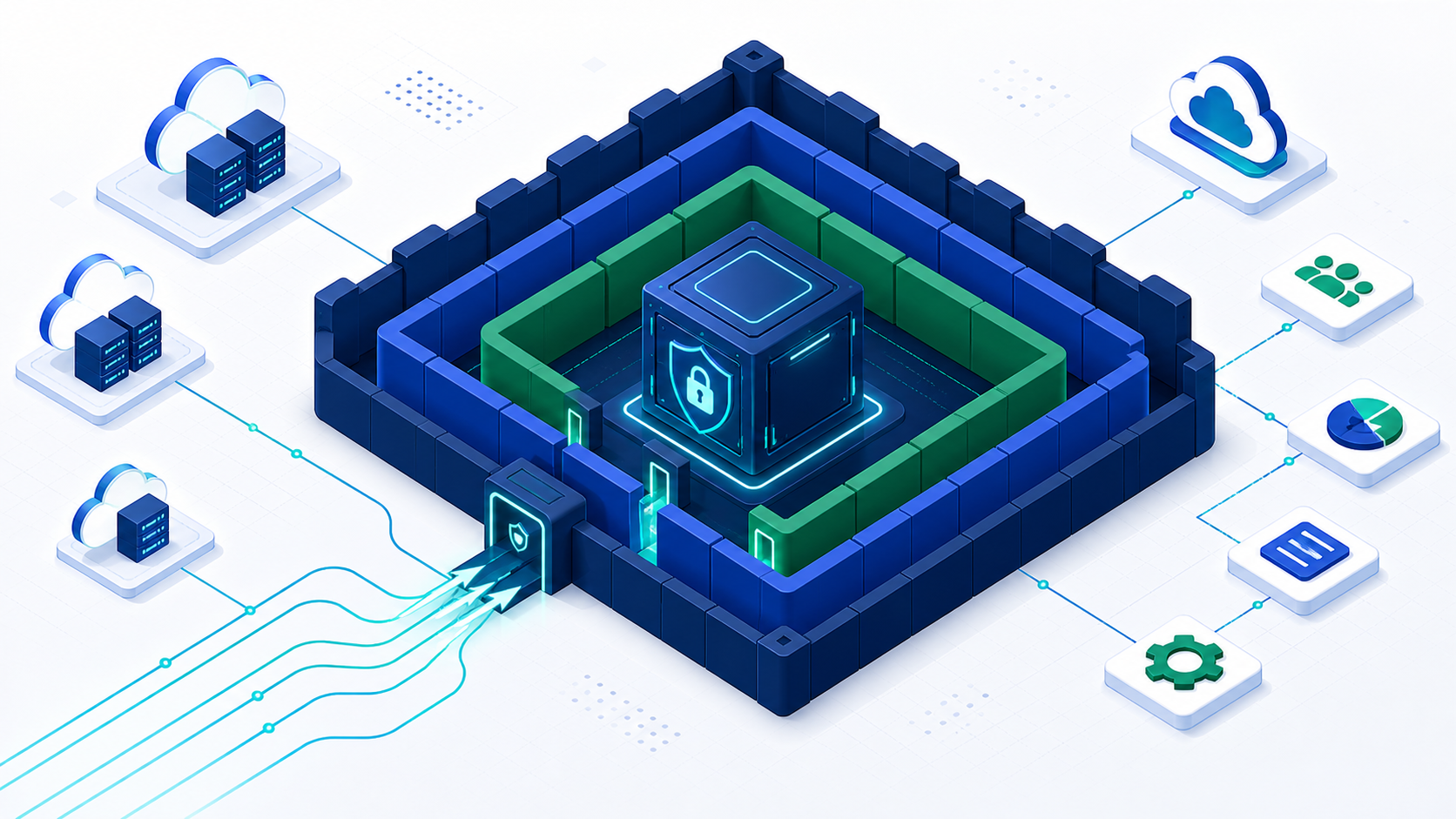
Defining your PCI-DSS cardholder data environment scope is the single most consequential decision you'll make during a PCI-DSS compliance program — get it wrong, and you either expose your organization to massive audit failures or waste thousands of dollars securing systems that didn't need to be in scope. This step-by-step guide breaks down exactly how to identify, document, and validate your CDE scope so your assessment goes smoothly and your cardholder data stays protected. Whether you're preparing for your first Report on Compliance (ROC) or tightening up an existing program, the process below reflects current PCI Security Standards Council guidance and real-world scoping best practices.
What Is the PCI-DSS Cardholder Data Environment?
The Cardholder Data Environment (CDE) is defined by the PCI Security Standards Council as the people, processes, and technologies that store, process, or transmit cardholder data (CHD) or sensitive authentication data (SAD) — plus any system components that are connected to or could impact the security of those systems.
This definition is deliberately broad. It means your CDE isn't just your payment terminal or your checkout page. It can include:
- Web servers that host your payment forms
- Databases that store transaction records
- Network segments connected to payment systems
- Employees who handle card data manually
- Third-party service providers with access to your payment environment
- Security tools like firewalls, SIEM platforms, and vulnerability scanners that monitor CDE systems
Under PCI-DSS v4.0, the scope definition has been reinforced with a stronger emphasis on understanding data flows and ensuring that all connected system components are accounted for — not just the ones that obviously touch card data.
Why Accurate PCI-DSS Cardholder Data Environment Scope Matters
Scoping errors are the root cause of most PCI-DSS assessment failures and post-breach compliance violations. There are two failure modes:
- Under-scoping: You exclude systems that actually touch or influence cardholder data. This creates real security gaps and can result in a failed QSA assessment, fines from card brands, or liability after a breach.
- Over-scoping: You include systems that have no meaningful connection to the CDE. This inflates your compliance workload, increases costs, and makes your program harder to sustain.
The goal is a right-sized scope — one that accurately reflects your environment and gives you a defensible, documented rationale for every inclusion and exclusion decision.
Step 1: Identify All Cardholder Data Flows
Before you can define your scope, you need to know exactly where cardholder data lives and moves. This starts with a thorough data flow mapping exercise.
How to Map Your Cardholder Data Flows
- Interview stakeholders: Talk to your payments team, IT, customer service, and finance. Ask where card data enters your environment, how it moves, and where it exits.
- Review system architecture diagrams: Identify every application, server, database, and network device involved in payment processing.
- Trace the full transaction lifecycle: From the moment a customer enters their card number to the moment the transaction is settled and records are archived or deleted.
- Identify storage locations: Check databases, log files, spreadsheets, email archives, and backup systems for stored CHD or SAD.
- Document third-party touchpoints: Note every service provider, payment gateway, or processor that receives or accesses card data on your behalf.
The output of this step should be a formal data flow diagram (DFD) that your QSA can review. PCI-DSS v4.0 Requirement 12.5.2 explicitly requires organizations to document and confirm the accuracy of their PCI-DSS scope at least once every 12 months and after significant changes.
Step 2: Categorize System Components by Scope Status
Once you have your data flow map, you can classify every system component into one of three categories:
| Category | Description | PCI-DSS Applicability |
|---|---|---|
| In-Scope (CDE) | Systems that store, process, or transmit CHD/SAD | All PCI-DSS requirements apply |
| Connected-to / Security-Impacting | Systems that connect to CDE systems or could affect their security | All PCI-DSS requirements apply |
| Out-of-Scope | Systems with no connectivity to CDE and no ability to impact its security | No PCI-DSS requirements apply |
The "connected-to" category is where most organizations make scoping mistakes. A system doesn't have to touch card data directly to be in scope — if it can communicate with a CDE system, it's in scope unless you can demonstrate adequate segmentation.
Step 3: Implement and Validate Network Segmentation
Network segmentation is the most powerful tool you have for reducing your PCI-DSS cardholder data environment scope. By isolating CDE systems from the rest of your network, you can prevent out-of-scope systems from becoming in-scope simply because they share a network segment.
Segmentation Methods That Work
- Firewalls with strict ACLs: Restrict all traffic between CDE and non-CDE segments to only what is explicitly required for business operations.
- VLANs: Logically separate CDE systems at the network layer, though VLANs alone are generally not considered sufficient — they should be combined with firewall controls.
- DMZs: Place internet-facing components (like web servers) in a DMZ that is isolated from internal CDE systems.
- Zero-trust architecture: Enforce identity-based access controls so that even systems on the same network cannot communicate with CDE resources without explicit authorization.
Validating Your Segmentation
PCI-DSS v4.0 Requirement 11.4.5 requires that segmentation controls be tested at least every six months and after any significant changes to the network. This typically involves penetration testing specifically designed to verify that out-of-scope systems cannot reach CDE systems. Document your segmentation testing methodology and results — your QSA will want to see them.
Step 4: Account for Third-Party Service Providers
Third-party service providers (TPSPs) are a critical and often underestimated part of your PCI-DSS scope. Any vendor that stores, processes, or transmits cardholder data on your behalf — or that provides services that could impact the security of your CDE — must be included in your scoping analysis.
Key Actions for TPSP Scoping
- Maintain a complete inventory of all TPSPs with access to your CDE or cardholder data.
- Verify PCI-DSS compliance status for each TPSP by obtaining their current Attestation of Compliance (AOC) or confirming they appear on a card brand's list of compliant providers.
- Define responsibility boundaries using a formal responsibility matrix (required under PCI-DSS v4.0 Requirement 12.8.5). Know exactly which PCI-DSS requirements your TPSP owns versus which ones remain your responsibility.
- Review contracts to ensure TPSPs are contractually obligated to maintain PCI-DSS compliance and notify you of any security incidents affecting your data.
If you use a fully outsourced payment solution — such as a hosted payment page or a payment gateway that handles all card data — you may be able to significantly reduce your scope. However, you still need to document this arrangement and confirm the provider's compliance status annually.
Step 5: Evaluate Scope-Reduction Technologies
Several technologies can dramatically shrink your PCI-DSS cardholder data environment scope by ensuring that raw cardholder data never enters your systems in the first place.
Tokenization
Tokenization replaces a card number with a non-sensitive token that has no exploitable value outside the tokenization system. If implemented correctly, systems that only handle tokens — and never the original PAN — can potentially be removed from scope entirely. The tokenization system itself remains in scope, but it can be isolated to a very small footprint.
Point-to-Point Encryption (P2PE)
PCI-validated P2PE solutions encrypt card data at the point of interaction (e.g., the payment terminal) and decrypt it only within the secure environment of a validated P2PE solution provider. Merchants using a validated P2PE solution can dramatically reduce the number of applicable PCI-DSS requirements and the scope of their assessment. Review the PCI SSC's list of validated P2PE solutions before selecting a provider.
Hosted Payment Pages
If your e-commerce checkout redirects customers to a fully hosted payment page operated by a compliant payment processor, card data never touches your web servers. This can reduce your SAQ eligibility to SAQ A, the simplest self-assessment questionnaire available.
Step 6: Document Your Scope and Maintain It Continuously
Scoping is not a one-time exercise. Your CDE scope must be formally documented and reviewed at least annually — and immediately after any significant change to your environment, such as a new application deployment, a network architecture change, or a new third-party integration.
What Your Scope Documentation Should Include
- A current network diagram showing all CDE systems and segmentation controls
- A data flow diagram showing all cardholder data flows
- An inventory of all in-scope system components
- A list of all TPSPs and their compliance status
- Documentation of segmentation testing results
- A written scope confirmation signed off by senior management
Keeping this documentation current is one of the most operationally demanding aspects of PCI-DSS compliance — and it's exactly the kind of continuous monitoring and evidence collection that platforms like ComplyGuard are built to automate. Instead of manually updating spreadsheets and chasing down vendor AOCs, ComplyGuard centralizes your compliance evidence, tracks scope changes, and alerts you when documentation needs to be refreshed.
For organizations managing multiple compliance frameworks simultaneously — for example, PCI-DSS alongside SOC 2 or ISO 27001 — the ComplyGuard platform comparison shows how a unified approach can eliminate redundant work across frameworks.
Common PCI-DSS Scoping Mistakes to Avoid
- Assuming cloud infrastructure is out of scope: Cloud environments are subject to the same scoping rules as on-premises infrastructure. Your cloud provider's PCI-DSS compliance covers their infrastructure; your configurations and workloads are your responsibility.
- Forgetting about log management systems: If your SIEM or log aggregation platform receives logs from CDE systems, it is likely in scope.
- Ignoring developer and test environments: If test environments use real cardholder data (which they shouldn't), they are in scope. PCI-DSS Requirement 6.3.4 prohibits the use of live PANs in test environments.
- Treating segmentation as a one-time configuration: Firewall rules drift over time. Without continuous monitoring, segmentation controls can degrade and previously out-of-scope systems can inadvertently become connected to the CDE.
- Overlooking physical access points: Physical locations where card data is handled — retail stores, call centers, back-office areas — are part of your CDE scope and subject to physical security requirements.
The NIST Cybersecurity Framework provides a complementary lens for thinking about asset identification and protection that can strengthen your scoping methodology, particularly for organizations that need to align PCI-DSS with broader security program requirements.
Conclusion: Get Your PCI-DSS Cardholder Data Environment Scope Right the First Time
Defining your PCI-DSS cardholder data environment scope accurately is the foundation of an efficient, defensible compliance program. A well-scoped CDE means fewer systems to secure, lower assessment costs, faster remediation cycles, and a much stronger security posture for the data your customers trust you to protect. The steps outlined here — mapping data flows, categorizing system components, validating segmentation, managing third-party providers, leveraging scope-reduction technologies, and maintaining continuous documentation — give you a repeatable, auditor-ready process that holds up under scrutiny.
If you're ready to stop managing PCI-DSS scope in spreadsheets and start automating the evidence collection, vendor tracking, and continuous monitoring that keeps your scope documentation current year-round, talk to the ComplyGuard team today. Or explore our compliance automation plans to see how quickly your organization can achieve and maintain PCI-DSS compliance without the overhead of expensive consultants.