PCI-DSS Cardholder Data Environment Scope: Step-by-Step Guide
Defining your PCI-DSS cardholder data environment scope is the single most consequential decision you'll make during a Payment Card Industry Data Security Standard assessment — get it wrong, and you either expose your organization to massive fines and breach liability, or you waste thousands of hours securing systems that didn't need to be in scope in the first place. For SMBs processing, storing, or transmitting cardholder data, scoping is where compliance either becomes manageable or spirals into an expensive nightmare. This step-by-step guide breaks down exactly how to define, document, and validate your CDE scope so you can approach your next assessment with confidence.
What Is the PCI-DSS Cardholder Data Environment Scope?
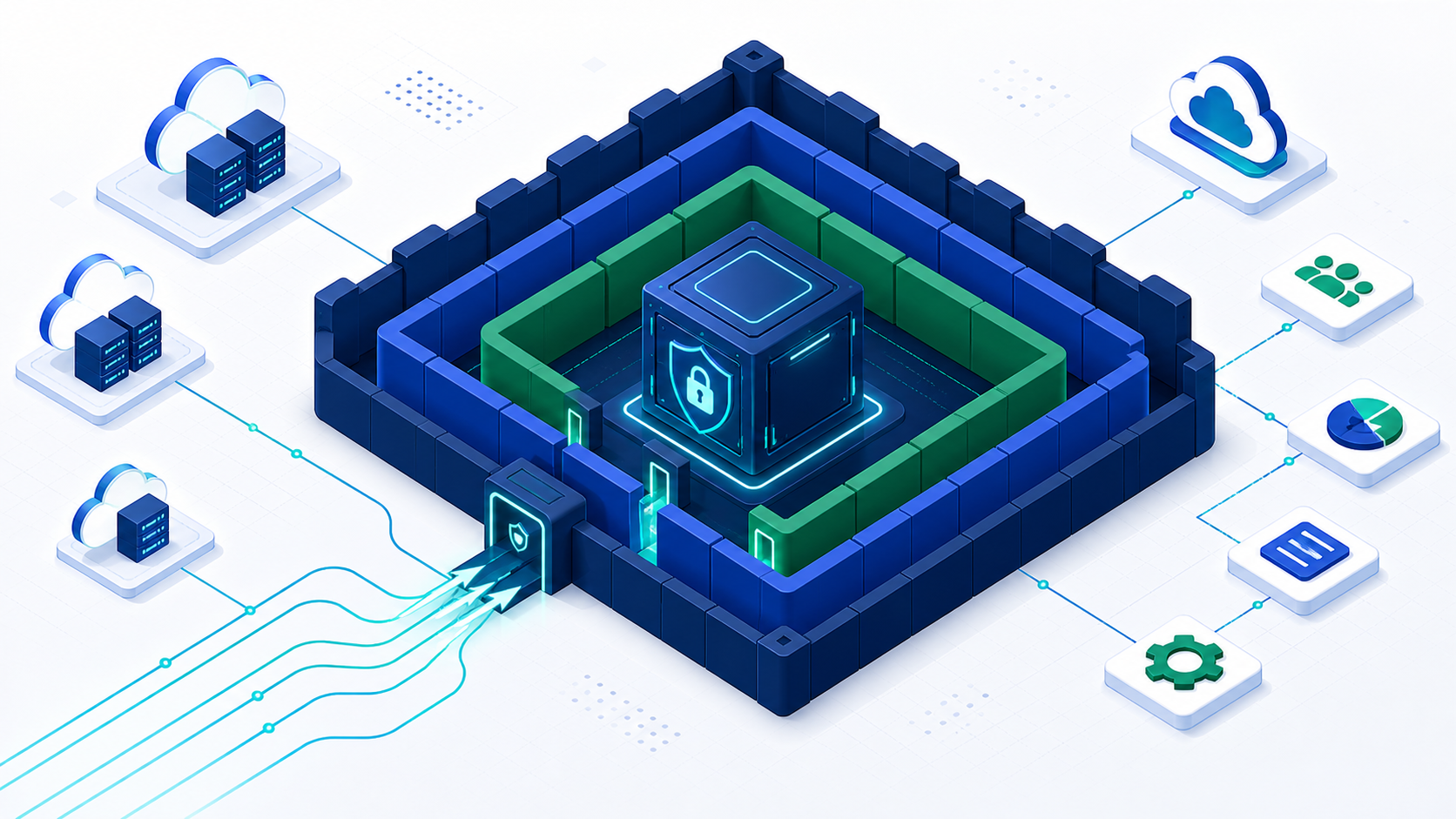
The cardholder data environment (CDE) is defined by the PCI Security Standards Council as the people, processes, and technologies that store, process, or transmit cardholder data (CHD) or sensitive authentication data (SAD) — plus any system components that are connected to or could impact the security of those systems.
Under PCI-DSS v4.0, scope has been clarified and expanded. It's no longer just about where card data lives. It includes:
- System components that store, process, or transmit CHD/SAD
- Connected system components that can communicate with CDE systems, even if they don't touch card data directly
- Security-providing components such as firewalls, intrusion detection systems, and authentication servers that protect the CDE
- People and processes that administer, manage, or interact with CDE systems
Understanding this definition is foundational. Many SMBs mistakenly assume that because their payment processor handles card data, they have no CDE. That's rarely true — your point-of-sale terminals, e-commerce checkout pages, and internal networks almost certainly bring systems into scope.
Step 1: Identify All Cardholder Data Flows
You cannot scope what you cannot see. The first step in defining your PCI-DSS cardholder data environment scope is building a complete, accurate data flow diagram that traces every path cardholder data takes through your organization.
How to Map Cardholder Data Flows
- Interview stakeholders: Talk to finance, IT, customer service, and operations teams. Ask where customers provide payment information, how it's captured, where it goes next, and who has access.
- Audit your technology stack: Review your payment terminals, e-commerce platforms, CRMs, ERP systems, databases, and cloud services. Any system that touches a card number — even temporarily — is a candidate for CDE inclusion.
- Trace every entry point: Card data can enter your environment through web forms, mobile apps, phone orders (MOTO), in-person terminals, or API integrations with payment gateways.
- Document transmission paths: Map how data moves between systems — internal networks, third-party APIs, encrypted tunnels, and cloud storage buckets all need to be documented.
- Identify storage locations: Search for CHD in databases, log files, spreadsheets, email archives, and backup systems. Unintentional storage is one of the most common scoping failures.
The output of this step should be a formal data flow diagram that your Qualified Security Assessor (QSA) or Internal Security Assessor (ISA) can review. Platforms like ComplyGuard automate much of this discovery process, helping you build and maintain living data flow diagrams that update as your environment changes.
Step 2: Categorize System Components by Scope Status
Once you've mapped your data flows, every system component in your environment needs to be categorized into one of three scope categories:
| Category | Description | PCI-DSS Applicability |
|---|---|---|
| In-Scope (CDE) | Systems that store, process, or transmit CHD/SAD | All PCI-DSS requirements apply |
| Connected-to-CDE | Systems that can communicate with CDE components but don't directly handle card data | All PCI-DSS requirements apply |
| Out-of-Scope | Systems with no connectivity to the CDE and no ability to impact its security | No PCI-DSS requirements apply |
The critical insight here is that "connected-to-CDE" systems are fully in scope. A marketing server that can reach your payment database over your internal network is in scope, even if it never touches a card number. This is where many organizations dramatically underestimate their scope.
Common Systems That Unexpectedly Fall In-Scope
- Active Directory / LDAP servers that authenticate users with CDE access
- Log aggregation and SIEM platforms receiving logs from CDE systems
- Vulnerability scanners and patch management tools that touch CDE hosts
- Jump servers or bastion hosts used to access CDE systems
- DNS and NTP servers used by CDE components
- Email servers if payment data is ever transmitted via email
Step 3: Implement Network Segmentation to Reduce Scope
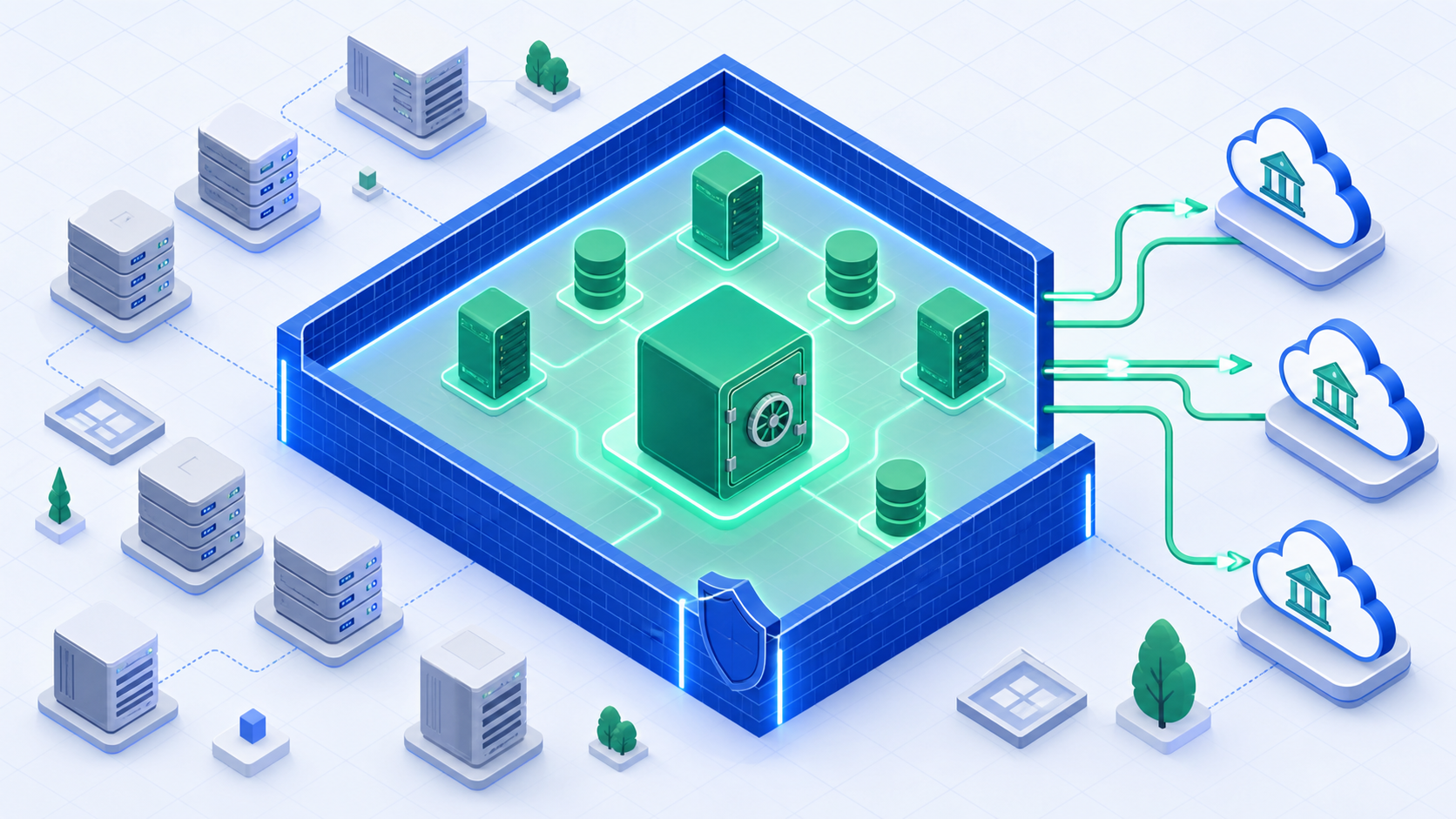
Network segmentation is the most powerful tool available for reducing your PCI-DSS cardholder data environment scope. By isolating CDE systems from the rest of your network using firewalls, VLANs, or micro-segmentation, you can prevent non-CDE systems from being dragged into scope simply because they share a network.
Segmentation Requirements Under PCI-DSS v4.0
PCI-DSS v4.0 doesn't mandate segmentation, but it strongly incentivizes it. Without segmentation, your entire network is potentially in scope. With effective segmentation, you can limit scope to a well-defined, isolated CDE segment. The standard requires that if you claim segmentation, you must:
- Implement controls that prevent out-of-scope systems from accessing CDE systems
- Verify segmentation effectiveness at least once every six months (annually for service providers)
- Document the segmentation controls and their configuration
- Test segmentation using penetration testing techniques
According to the PCI-DSS v4.0 standard documentation, segmentation testing must confirm that all paths from out-of-scope systems to CDE systems are blocked, not just the obvious ones. This includes testing for lateral movement paths, shared services, and management interfaces.
Practical Segmentation Approaches for SMBs
- VLAN-based segmentation: Place all CDE systems on a dedicated VLAN with strict firewall rules controlling ingress and egress
- Cloud-based isolation: Use separate VPCs or virtual networks in AWS, Azure, or GCP for CDE workloads
- Point-to-point encryption (P2PE): Validated P2PE solutions can dramatically reduce scope by encrypting card data at the point of interaction before it enters your network
- Tokenization: Replace card numbers with tokens in your systems, keeping actual CHD only with your payment processor
Step 4: Evaluate Third-Party Service Providers and Their Impact on Scope
Third-party service providers (TPSPs) that store, process, or transmit cardholder data on your behalf — or that provide services that could impact the security of your CDE — must be included in your scoping analysis. This includes payment gateways, hosting providers, managed security service providers, and SaaS platforms with CDE access.
Key Questions to Ask About Each TPSP
- Do they store, process, or transmit CHD on our behalf?
- Do they have access to our CDE systems or networks?
- Are they a PCI-DSS validated service provider? (Check the Visa Global Registry of Service Providers or your card brand's equivalent)
- What PCI-DSS requirements do they manage on our behalf vs. requirements we retain responsibility for?
- Do they provide a current Attestation of Compliance (AOC)?
Under PCI-DSS v4.0, you must maintain a list of all TPSPs, document which PCI-DSS requirements each TPSP manages, and obtain written acknowledgment from each TPSP that they are responsible for the security of the cardholder data they handle. This is not optional — it's a formal requirement under Requirement 12.8.
Step 5: Document Your Scope and Validate It Annually
Scoping is not a one-time exercise. Your PCI-DSS cardholder data environment scope must be formally documented and revalidated at least once every 12 months, and whenever significant changes occur in your environment — such as new payment channels, infrastructure migrations, or acquisitions.
What Your Scope Documentation Should Include
- A complete inventory of all in-scope system components with their roles and functions
- Data flow diagrams showing all CHD/SAD flows
- Network diagrams showing CDE boundaries and segmentation controls
- A list of all TPSPs and their compliance status
- Documentation of segmentation controls and testing results
- A formal scope confirmation signed by senior management
Maintaining this documentation manually is time-consuming and error-prone. ComplyGuard's compliance automation platform provides continuous asset inventory tracking, automated evidence collection, and real-time scope change alerts — so your documentation stays accurate between annual assessments without requiring a dedicated compliance team. If you're evaluating compliance tools, our comparison page shows how ComplyGuard stacks up against traditional approaches and competing platforms.
Scope Validation Techniques
- Internal audits: Quarterly reviews of system inventories and data flow diagrams
- Penetration testing: Annual penetration tests that specifically validate segmentation effectiveness
- Automated scanning: Continuous scanning for new systems or unauthorized connections to the CDE
- Change management reviews: Formal process to evaluate every infrastructure change for scope impact before implementation
Common PCI-DSS Scoping Mistakes to Avoid
Even experienced compliance teams make scoping errors that create significant risk. Here are the most common pitfalls:
- Assuming outsourcing eliminates scope: Using a payment processor or gateway reduces scope but rarely eliminates it entirely. Your terminals, checkout pages, and network segments may still be in scope.
- Ignoring legacy systems: Old servers, forgotten databases, and decommissioned-but-still-running systems frequently store CHD that nobody knew about.
- Overlooking cloud environments: Cloud infrastructure follows a shared responsibility model — the cloud provider secures the infrastructure, but you're responsible for what runs on it.
- Failing to account for employee devices: Laptops and mobile devices used to access CDE systems may be in scope, particularly in remote work environments.
- Not testing segmentation: Claiming segmentation without testing it is a compliance failure waiting to happen. Assessors will test it — you should too.
Conclusion: Take Control of Your PCI-DSS Cardholder Data Environment Scope
Defining and managing your PCI-DSS cardholder data environment scope is a continuous, strategic process — not a checkbox exercise. When done correctly, effective scoping reduces your compliance burden, lowers your attack surface, and makes your annual assessment far less painful and expensive. The five steps outlined here — mapping data flows, categorizing systems, implementing segmentation, managing third parties, and maintaining living documentation — give you a repeatable framework that scales as your business grows.
The challenge for most SMBs is that maintaining this level of rigor without dedicated compliance staff is genuinely difficult. That's exactly why ComplyGuard was built. Our AI-powered platform automates asset discovery, maintains your data flow diagrams, tracks TPSP compliance status, and generates audit-ready scope documentation — helping you achieve and maintain PCI-DSS compliance at a fraction of the cost of traditional consultants. Explore our pricing plans to see how affordable continuous compliance can be, or talk to our compliance team today to get a personalized scoping assessment for your environment.