HIPAA Subcontractor Compliance: What BAAs Miss & How to Fix It
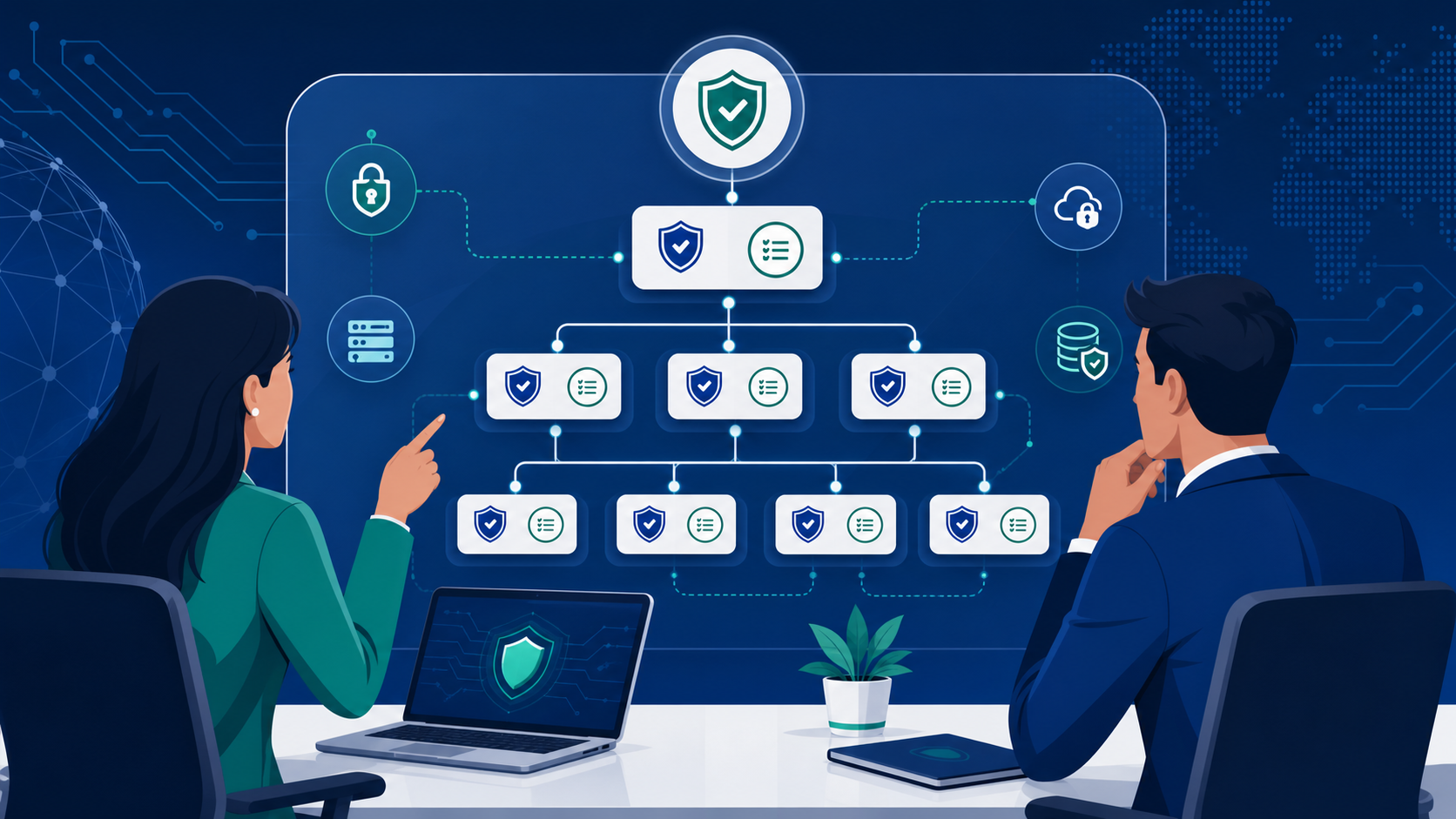
Most covered entities believe that signing a Business Associate Agreement is the finish line for HIPAA subcontractor compliance — but in reality, it's barely the starting line. When your business associates delegate work to their own vendors, subcontractors, and cloud providers, your protected health information travels further than most compliance programs ever track, creating liability exposure that a standard BAA simply cannot close on its own.
The Hidden Compliance Gap in HIPAA Subcontractor Relationships
The HIPAA Omnibus Rule of 2013 extended direct liability to business associates and their subcontractors, meaning that a breach caused by a fourth-party vendor can still land squarely on your organization's doorstep. Yet the majority of covered entities and even many business associates treat subcontractor oversight as an afterthought — a checkbox buried in a vendor management spreadsheet that nobody reviews until an incident occurs.
Consider a common scenario: a healthcare SaaS company (your business associate) uses a cloud infrastructure provider, a third-party logging service, and an offshore development team. Each of those parties may touch PHI. Each is technically a subcontractor under HIPAA. And each requires its own BAA — not just with your business associate, but with appropriate controls, monitoring, and accountability mechanisms flowing all the way down the chain.
According to HHS guidance on business associates, a subcontractor that creates, receives, maintains, or transmits PHI on behalf of a business associate is itself a business associate and must comply with the full HIPAA Security and Privacy Rules. The obligation is not optional, and ignorance of the subcontractor relationship is not a defense.
What Standard BAAs Actually Cover (And What They Don't)
A well-drafted Business Associate Agreement will typically address the following:
- Permitted uses and disclosures of PHI
- Obligations to implement appropriate safeguards
- Requirements to report breaches and security incidents
- Obligations to make PHI available for patient access requests
- Termination provisions and data return or destruction requirements
- Subcontractor BAA requirements (usually a single clause)
That last bullet is where most programs fall apart. A typical BAA clause on subcontractors reads something like: "Business Associate shall ensure that any subcontractors that create, receive, maintain, or transmit PHI on behalf of Business Associate agree to the same restrictions and conditions that apply to Business Associate."
This language is legally necessary but operationally hollow. It tells your business associate what to do but provides you with no mechanism to verify whether they've done it, how they've done it, or what happens when a subcontractor fails to comply. You are essentially trusting a contractual promise with no audit rights, no evidence requirements, and no real-time visibility.
The Four Critical Gaps BAAs Leave Open
- No inventory of subcontractors: Most BAAs don't require business associates to disclose which subcontractors they use or notify you when they add new ones. PHI can flow to a new vendor overnight without your knowledge.
- No security control verification: Requiring "appropriate safeguards" is vague. Without specifying control frameworks, audit rights, or evidence of compliance (such as SOC 2 reports or penetration test results), you have no way to assess actual risk.
- Weak breach notification chains: HIPAA requires breach notification within 60 days of discovery, but if your business associate's subcontractor takes 45 days to notify the business associate, you may have almost no time to act before your own regulatory clock expires.
- No termination cascade: If you terminate a BAA with a business associate, there is typically no automatic mechanism ensuring that the business associate's subcontractors also cease processing your PHI and return or destroy it.
Building a HIPAA Subcontractor Compliance Program That Actually Works
Closing these gaps requires moving beyond contract language into operational compliance. Here is a practical framework for covered entities and business associates alike.
1. Require a Subcontractor Inventory and Change Notification
Amend your BAA template or add an addendum requiring business associates to maintain and share a current list of all subcontractors that access PHI. Require written notice — typically 30 days in advance — before adding any new subcontractor. This gives you the opportunity to assess risk before PHI flows to a new party, not after.
2. Specify Minimum Security Control Requirements
Rather than relying on the phrase "appropriate safeguards," reference a recognized control framework. The NIST Cybersecurity Framework and the HIPAA Security Rule's own implementation specifications provide a solid baseline. Require business associates to confirm that their subcontractors meet specific controls, such as:
- Encryption of PHI at rest and in transit (AES-256 minimum)
- Multi-factor authentication for all systems accessing PHI
- Annual risk assessments and documented remediation plans
- Access controls based on minimum necessary principles
- Incident response plans with defined notification timelines
- Employee HIPAA training completed within 30 days of hire and annually thereafter
3. Demand Evidence, Not Just Attestations
Self-attestation is the weakest form of compliance evidence. Where possible, require business associates to obtain and share third-party audit reports from their subcontractors. A SOC 2 Type II report, for example, provides independent verification that security controls were operating effectively over a defined period — not just that they exist on paper. For higher-risk subcontractors, consider requiring ISO 27001 certification or the right to conduct your own audits.
4. Tighten Breach Notification Timelines
HIPAA's 60-day clock is a ceiling, not a target. Negotiate shorter notification windows in your BAAs — 10 to 15 business days is increasingly common in sophisticated agreements. More importantly, require business associates to flow down equivalent or shorter timelines to their subcontractors, so that breach information reaches you with enough time to investigate, remediate, and notify affected individuals before your own deadline expires.
5. Conduct Periodic Vendor Risk Reviews
A BAA signed three years ago does not reflect the risk profile of a vendor today. Establish a cadence for reviewing business associate and subcontractor compliance — at minimum annually, and triggered by material changes such as mergers, acquisitions, significant technology changes, or reported security incidents. Document these reviews. In the event of an HHS investigation, your ability to demonstrate ongoing oversight is a significant mitigating factor.
Common HIPAA Subcontractor Compliance Mistakes to Avoid
| Mistake | Why It's Risky | How to Fix It |
|---|---|---|
| Treating BAA execution as the end of the process | Creates false confidence; no ongoing oversight | Implement annual vendor reviews and continuous monitoring |
| Using generic BAA templates without customization | Misses organization-specific risk scenarios | Tailor BAAs to the specific services and data flows involved |
| No subcontractor disclosure requirement | PHI flows to unknown parties without consent | Add subcontractor inventory and change notification clauses |
| Accepting self-attestation as compliance evidence | No independent verification of actual controls | Require SOC 2 reports, certifications, or audit rights |
| Ignoring offshore subcontractors | International data transfers may trigger additional regulations | Assess cross-border data flows and apply appropriate controls |
| No termination data destruction verification | PHI may persist in subcontractor systems after relationship ends | Require written certification of data destruction upon termination |
How Technology Can Automate HIPAA Subcontractor Oversight
Managing subcontractor compliance manually — through spreadsheets, email threads, and calendar reminders — is not only inefficient but genuinely risky. Documents get lost, review cycles get skipped, and new subcontractors slip through without proper vetting. This is precisely the problem that compliance automation platforms are designed to solve.
ComplyGuard's compliance automation features include a vendor and subcontractor management module that maps your entire third-party ecosystem, tracks BAA status, monitors evidence collection deadlines, and flags gaps in real time. Instead of chasing down SOC 2 reports manually, you can set automated reminders and evidence requests that keep your vendor compliance program running continuously — not just at audit time.
For organizations managing multiple compliance frameworks simultaneously, the efficiency gains are even more significant. Many of the controls required for HIPAA subcontractor oversight — vendor risk assessments, access control verification, incident response documentation — overlap substantially with SOC 2, ISO 27001, and other frameworks. A unified platform lets you collect evidence once and map it across multiple requirements, dramatically reducing the burden on your team. You can compare how ComplyGuard stacks up against traditional compliance approaches to see exactly where the time and cost savings come from.
HHS has made clear in its HIPAA Security Rule guidance that covered entities and business associates are expected to implement reasonable and appropriate safeguards based on their specific risk environment. Demonstrating that you have a systematic, documented, technology-supported approach to subcontractor oversight is one of the strongest positions you can take in the event of an investigation or audit.
What to Look for in a Compliance Automation Platform
- Automated vendor questionnaire distribution and tracking
- BAA status monitoring with expiration alerts
- Evidence collection and centralized document storage
- Risk scoring for individual vendors and subcontractors
- Audit-ready reporting that maps controls to HIPAA requirements
- Integration with existing tools (HR systems, cloud providers, ticketing platforms)
Conclusion: Close the Gaps in Your HIPAA Subcontractor Compliance Program
HIPAA subcontractor compliance is not a one-time paperwork exercise — it is an ongoing operational discipline that requires visibility, documentation, and accountability at every level of your vendor ecosystem. A signed BAA is necessary but never sufficient. The organizations that avoid costly breaches and regulatory penalties are the ones that treat subcontractor oversight as a living program, not a static contract clause. They know who has their PHI, what controls those parties have in place, and how quickly they will be notified if something goes wrong.
If your current compliance program relies on spreadsheets and annual check-ins to manage subcontractor risk, you are carrying more exposure than you realize. ComplyGuard was built specifically to help healthcare organizations and their business associates close these gaps — faster, more affordably, and with far less manual effort than traditional consulting approaches. Explore our pricing plans to find the right fit for your organization, or contact our team for a personalized walkthrough of how ComplyGuard can strengthen your HIPAA subcontractor compliance program starting today.