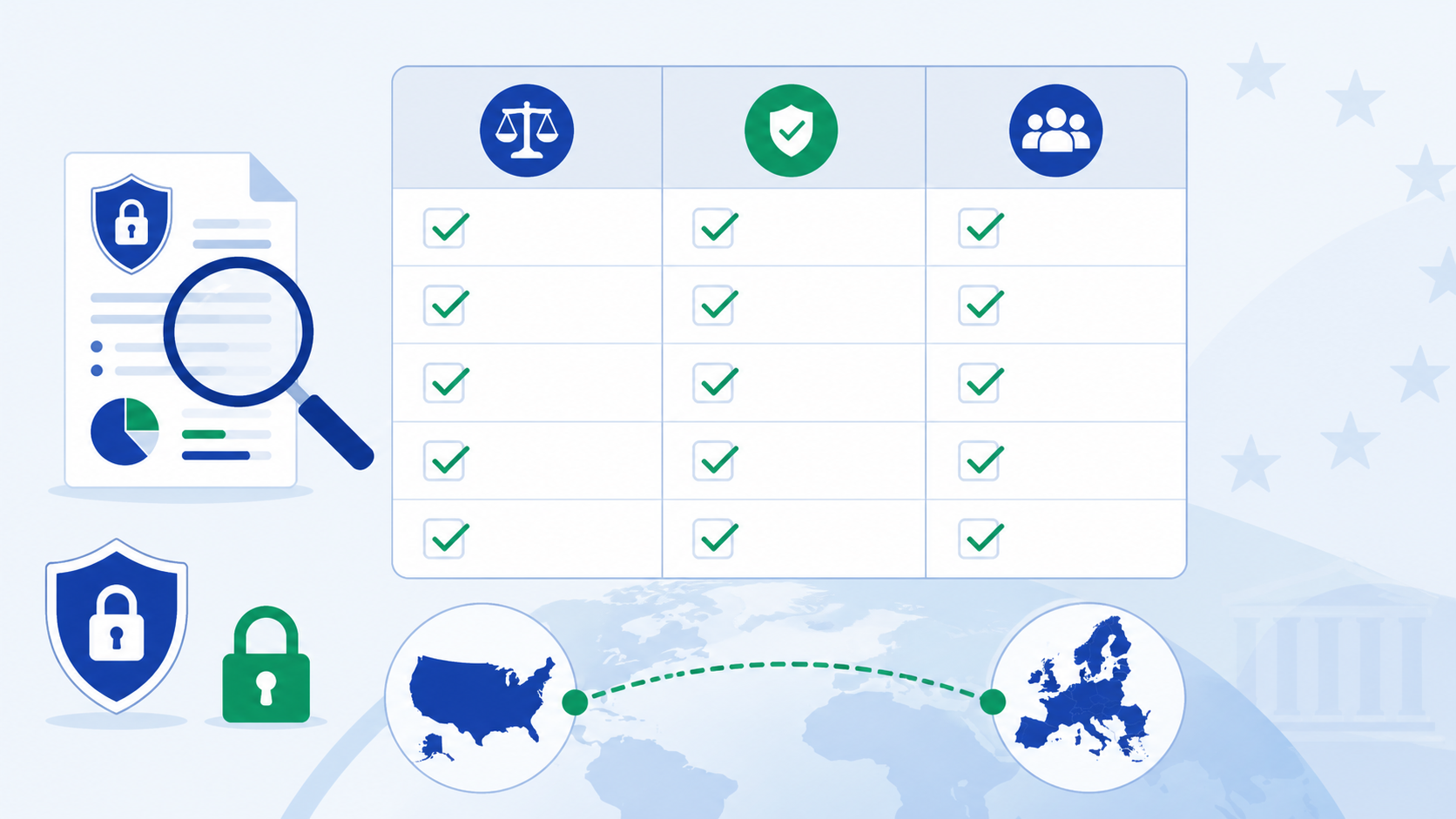
GDPR Data Breach Notification Requirements for SaaS
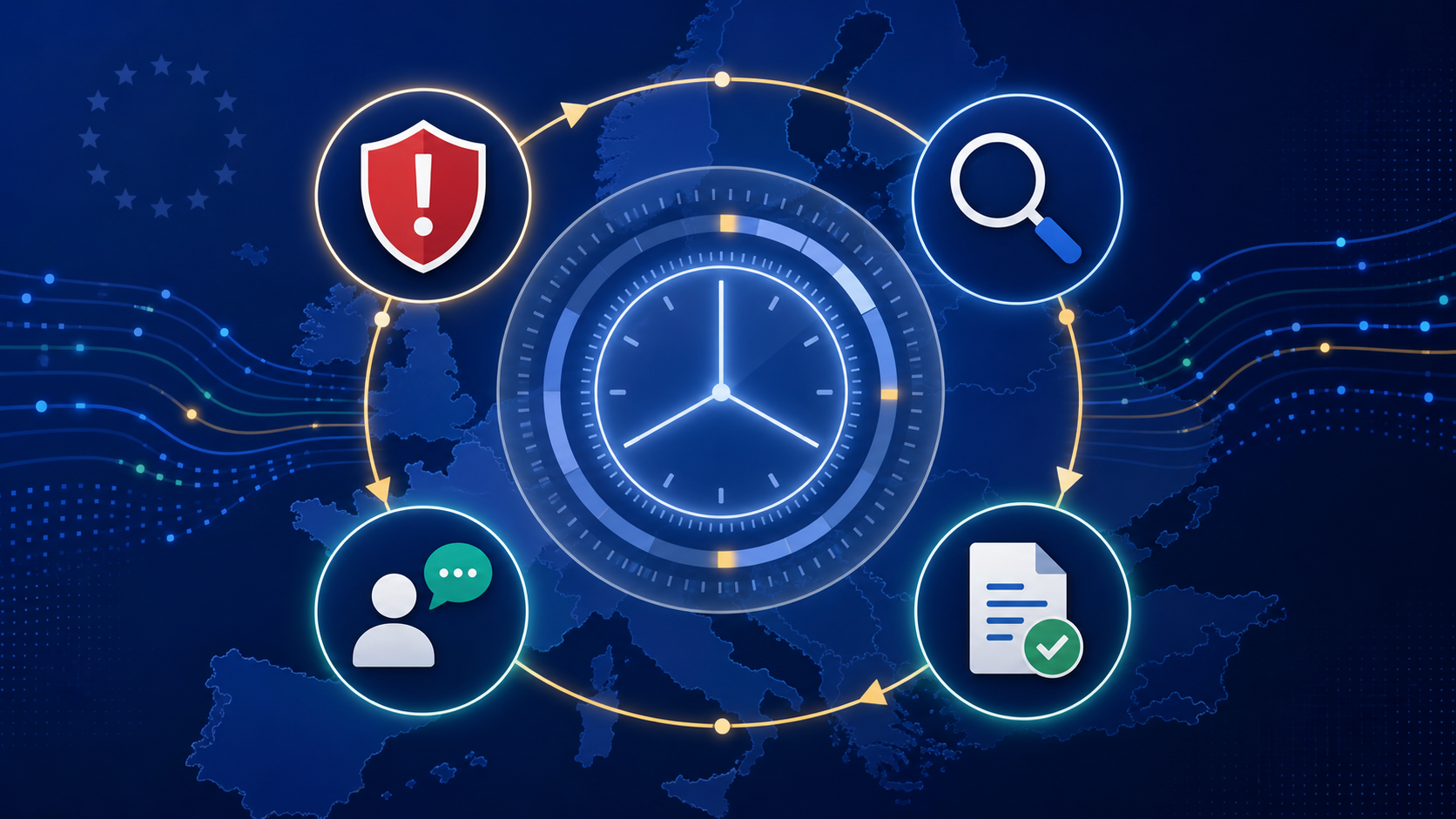
For SaaS companies operating under the General Data Protection Regulation, understanding and executing on GDPR data breach notification requirements is not optional — it is a legal obligation with serious financial consequences for non-compliance. A single misstep in your breach response timeline or notification content can result in fines of up to €10 million or 2% of global annual turnover, whichever is higher. This guide breaks down exactly what SaaS businesses need to know, from the moment a breach is detected to the documentation you must retain long after the incident is closed.
What Constitutes a "Personal Data Breach" Under GDPR?
Before diving into notification timelines, it is critical to understand what GDPR actually classifies as a reportable breach. Under Article 4(12) of the GDPR, a personal data breach is defined as:
"A breach of security leading to the accidental or unlawful destruction, loss, alteration, unauthorised disclosure of, or access to, personal data transmitted, stored or otherwise processed."
This definition is deliberately broad. For SaaS companies, it encompasses a wide range of incidents that may not immediately feel like a "breach" in the traditional sense:
- A misconfigured cloud storage bucket exposing customer records
- An employee accidentally emailing a client list to the wrong recipient
- Ransomware encrypting databases containing personal data (even if no exfiltration is confirmed)
- A third-party vendor suffering a breach that affects data you processed through them
- Unauthorized access by a former employee whose credentials were not promptly revoked
- Accidental deletion of personal data without a recoverable backup
Not every breach triggers a notification obligation — but the burden of proof lies with you to document why a breach did not require notification. This is a nuance many SaaS teams miss entirely.
The 72-Hour Rule: GDPR Data Breach Notification Requirements to Supervisory Authorities
The most well-known element of GDPR data breach notification requirements is the 72-hour window. Under Article 33, when a personal data breach is likely to result in a risk to the rights and freedoms of natural persons, the data controller must notify the relevant supervisory authority — without undue delay and, where feasible, within 72 hours of becoming aware of the breach.
When Does the 72-Hour Clock Start?
This is where SaaS companies frequently stumble. The clock does not start when your security team confirms the breach — it starts when your organization becomes "aware" of it. The European Data Protection Board (EDPB) has clarified that awareness occurs when you have a reasonable degree of certainty that a security incident has occurred that has led to personal data being compromised.
In practical terms, this means:
- If a customer reports suspicious activity on their account at 9 AM Monday, and your team investigates and confirms a breach by 3 PM Monday, the 72-hour window began at 9 AM — not 3 PM.
- If an automated alert fires at 2 AM but no one reviews it until 10 AM, regulators may consider awareness to have begun at 2 AM depending on your documented on-call procedures.
This is why having a clearly documented incident response plan with defined escalation paths is not just good practice — it is a compliance necessity.
What Must the Supervisory Authority Notification Include?
Article 33(3) specifies the minimum content required in your notification to the supervisory authority. Your notification must include:
| Required Element | Details |
|---|---|
| Nature of the breach | Categories and approximate number of data subjects affected; categories and approximate number of records concerned |
| Contact details | Name and contact details of the Data Protection Officer (DPO) or other contact point |
| Likely consequences | Description of the probable consequences of the breach |
| Measures taken | Measures taken or proposed to address the breach, including mitigation steps |
Critically, Article 33(4) allows for phased notifications. If you cannot provide all information within 72 hours, you may submit an initial notification with available information and supplement it later — but you must explain the reason for the delay. This provision exists to prevent companies from waiting until they have a complete picture before notifying, which could take days or weeks.
Notifying Affected Data Subjects: When and How
Beyond notifying the supervisory authority, Article 34 requires that you notify the affected individuals themselves — but only when the breach is likely to result in a high risk to their rights and freedoms. This is a higher threshold than the supervisory authority notification standard.
What Qualifies as "High Risk"?
The EDPB's guidelines indicate that high risk scenarios typically involve:
- Exposure of financial data (credit card numbers, bank account details)
- Disclosure of special category data (health records, biometric data, political opinions, religious beliefs)
- Breaches that could enable identity theft or fraud
- Exposure of data belonging to vulnerable populations, including children
- Large-scale breaches affecting significant numbers of individuals
When high risk is determined, notification to data subjects must be made "without undue delay." Unlike the supervisory authority notification, there is no explicit 72-hour window for individual notifications — but regulators expect prompt action, and delays must be justifiable.
What Must Individual Notifications Contain?
Notifications to affected individuals must be written in clear, plain language and include:
- A description of the nature of the breach
- The name and contact details of your DPO or designated contact
- The likely consequences of the breach
- The measures taken or proposed to address the breach and mitigate its effects
- Specific recommendations for individuals to protect themselves (e.g., change passwords, monitor financial accounts)
Notifications should be direct — sent via email, SMS, or other direct communication channels. A generic banner on your website or a buried blog post does not satisfy the notification requirement unless direct communication is demonstrably impossible.
Exemptions to Individual Notification
Article 34(3) provides three exemptions where individual notification is not required:
- You implemented appropriate technical and organizational measures (such as encryption) that render the data unintelligible to unauthorized parties
- You took subsequent measures that ensure the high risk to individuals is no longer likely to materialize
- Individual notification would involve disproportionate effort — in which case a public communication or equivalent measure may substitute
Even when relying on an exemption, you must document your reasoning thoroughly. Regulators will scrutinize these decisions during investigations.
SaaS-Specific Considerations: Data Processors vs. Data Controllers
Most SaaS companies operate in a dual capacity — as a data controller for their own employee and marketing data, and as a data processor for the personal data their customers store within the platform. This distinction has significant implications for breach notification obligations.
Obligations as a Data Processor
Under Article 33(2), if you are acting as a data processor and you experience a breach, you must notify your data controller customers "without undue delay" after becoming aware of the breach. The GDPR does not specify a fixed timeframe for processor-to-controller notification, but the EDPB recommends this happen within 24 hours to give controllers sufficient time to meet their own 72-hour obligation.
Your Data Processing Agreements (DPAs) should explicitly define:
- The notification timeframe (ideally 24 hours or less)
- The format and content of breach notifications
- The designated contact person for breach communications
- Your obligations to assist the controller in meeting their regulatory requirements
Failure to notify your controller customers promptly can expose both parties to regulatory action and can severely damage customer trust. Review your existing DPAs to ensure these provisions are clearly articulated — this is an area where many SaaS companies have significant gaps.
Documentation and the Accountability Principle
Article 33(5) requires that all personal data breaches be documented, regardless of whether they trigger a notification obligation. This internal record must include:
- The facts relating to the breach
- Its effects and likely consequences
- The remedial action taken
- The rationale for any decision not to notify the supervisory authority or data subjects
This documentation requirement reflects GDPR's broader accountability principle — you must be able to demonstrate compliance, not merely assert it. Regulators have the authority to request your breach register at any time, and gaps in documentation are treated as evidence of non-compliance even when the underlying breach may have been handled appropriately.
Maintaining a comprehensive breach register manually is time-consuming and error-prone. Platforms like ComplyGuard's compliance automation features provide structured incident logging, automated documentation workflows, and audit-ready reporting that ensure your breach records meet regulatory standards without requiring your team to build these processes from scratch.
Building a GDPR-Ready Incident Response Plan
The 72-hour window is unforgiving. SaaS companies that attempt to manage breach response ad hoc — without documented procedures, defined roles, and pre-approved communication templates — consistently fail to meet notification deadlines. A GDPR-ready incident response plan should include:
- Detection and triage procedures: How incidents are identified, logged, and escalated, including automated alerting thresholds
- Severity classification framework: A documented methodology for assessing breach risk and determining notification obligations
- Notification templates: Pre-approved drafts for supervisory authority notifications and individual communications, reviewed by legal counsel
- Defined roles and responsibilities: Who owns breach response, who communicates with regulators, who notifies customers
- DPO involvement: Clear protocols for engaging your Data Protection Officer at each stage
- Post-incident review: A structured process for root cause analysis and implementing corrective controls
The ENISA guidelines on assessing the severity of personal data breaches provide a practical methodology for risk scoring that can be incorporated directly into your classification framework.
For SaaS companies that also handle payment card data, breach response obligations intersect with PCI-DSS requirements. Understanding how these frameworks interact is essential — our compliance framework comparison breaks down the key differences and overlaps between GDPR, PCI-DSS, and other major standards.
Common Mistakes SaaS Companies Make with Breach Notifications
Based on enforcement actions and regulatory guidance, these are the most frequent failures observed in SaaS breach response:
- Waiting for certainty before notifying: Companies delay notification until they have a complete forensic picture, missing the 72-hour window. Phased notifications exist precisely for this scenario.
- Notifying the wrong supervisory authority: If you have customers across multiple EU member states, determining the lead supervisory authority based on your establishment requires careful analysis.
- Inadequate processor-to-controller notification: Failing to notify customer controllers promptly, or providing insufficient detail for them to assess their own obligations.
- Treating encryption as an automatic exemption: Encryption must be properly implemented and the keys must not have been compromised for this exemption to apply.
- Insufficient breach register maintenance: Logging only notifiable breaches and failing to document lower-risk incidents that still require internal records.
The full text of GDPR Article 33 is essential reading for any SaaS compliance or legal team responsible for breach response.
Conclusion
Navigating GDPR data breach notification requirements demands more than a surface-level understanding of the 72-hour rule. SaaS companies must build robust detection capabilities, maintain meticulous documentation, understand their dual role as both controller and processor, and execute notification procedures under significant time pressure — often in the middle of an active security incident. The cost of getting this wrong extends far beyond regulatory fines; it includes customer churn, reputational damage, and the operational chaos of managing a poorly handled breach response.
ComplyGuard is built specifically to help SaaS companies operationalize compliance requirements like these without the overhead of expensive consultants or fragmented spreadsheet-based processes. From automated incident logging and breach risk assessment workflows to audit-ready documentation and DPA management, our platform gives your team the structure and speed needed to respond confidently when it matters most. Explore ComplyGuard's pricing plans to find the right fit for your team, or speak with a compliance specialist to see how we can help you build a breach response program that holds up under regulatory scrutiny.